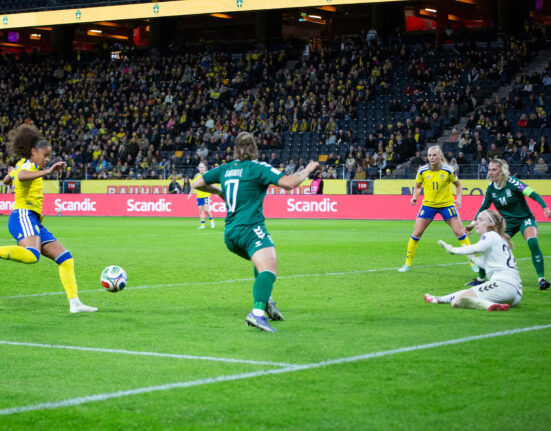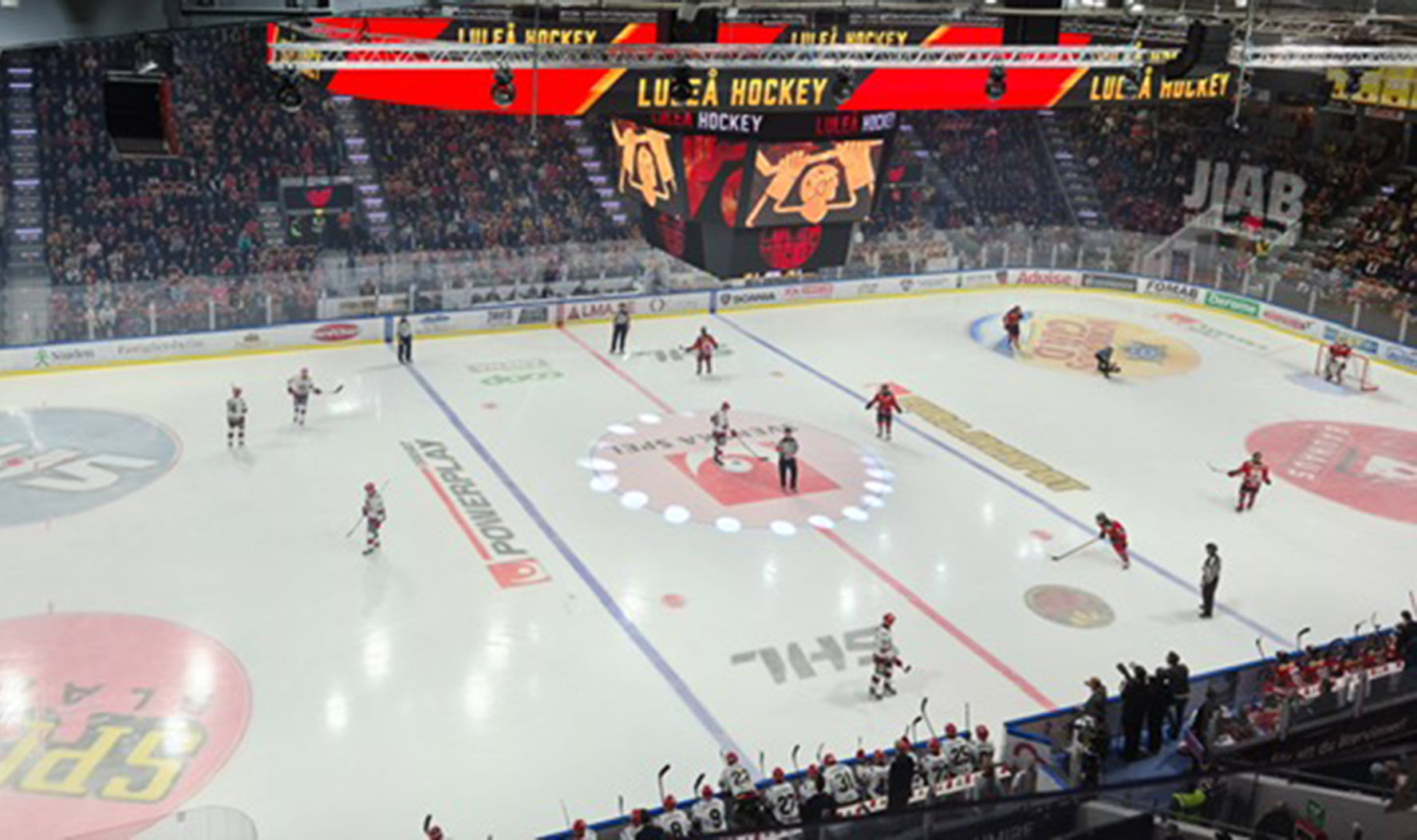






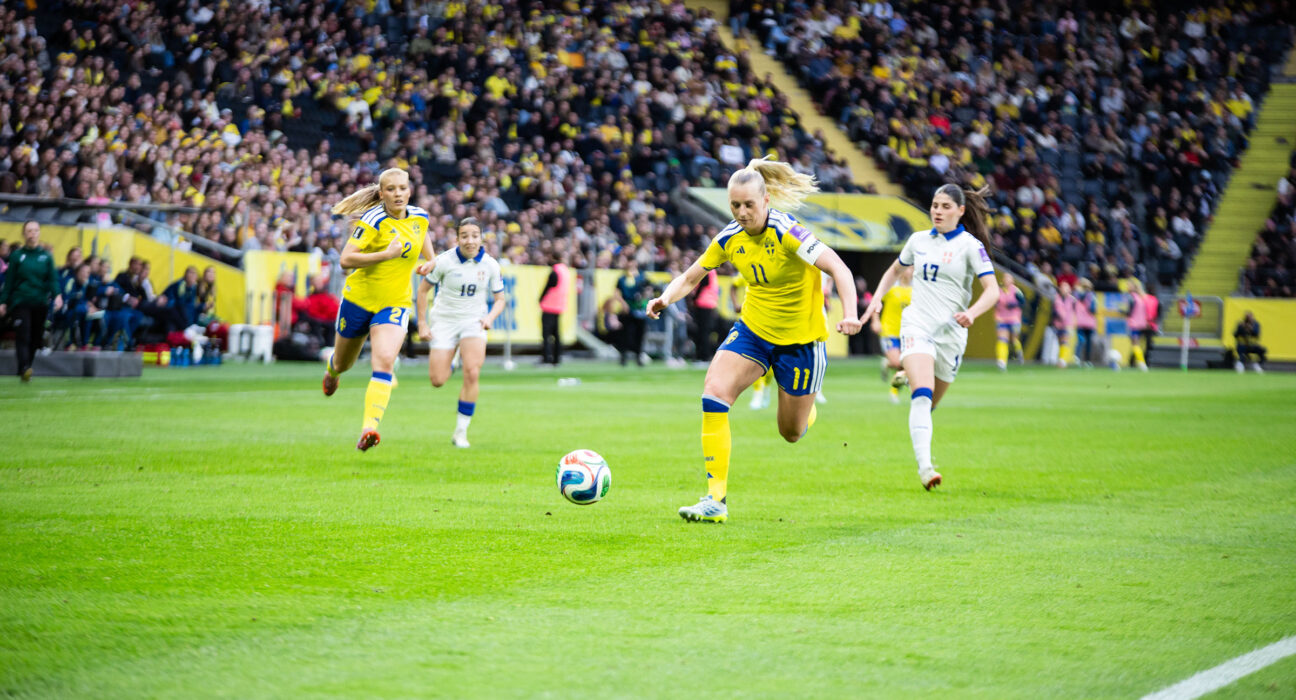
Swedish women’s national team played one of their World Cup qualification matches on home turf in Stockholm in front of 20,000 people and we were there to capture the moments.
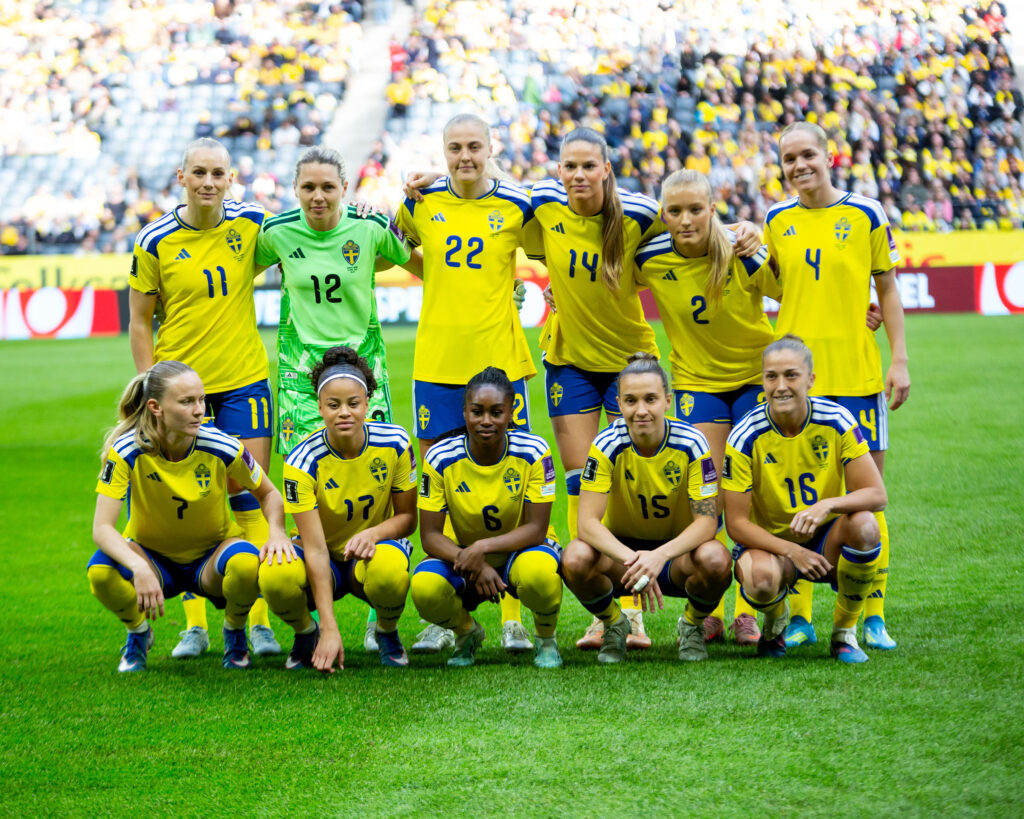
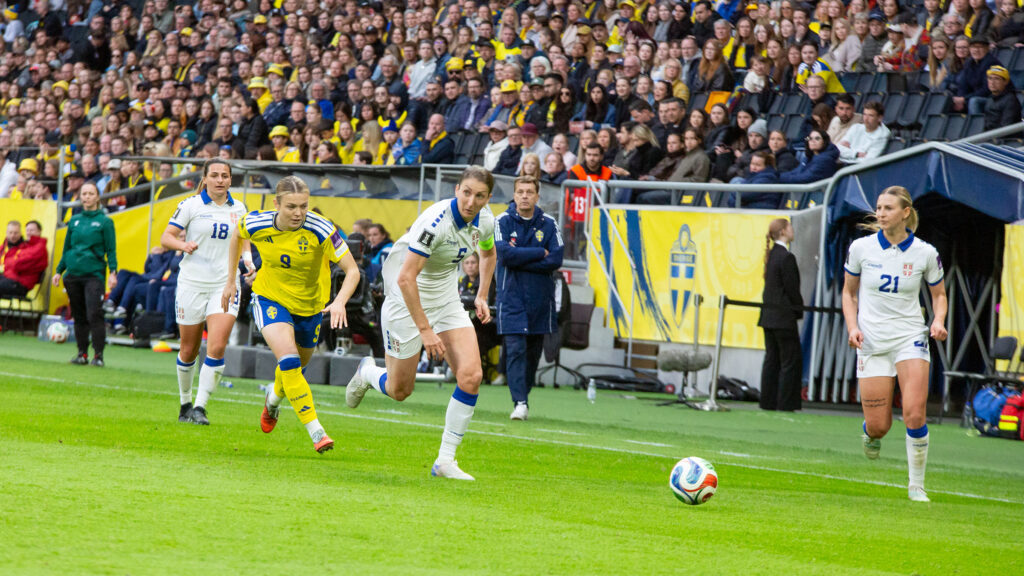
Team Sweden met Serbia on Strawberry Arena for a match that was pretty much a must-win after losing to Denmark in Gothenburg a few days earlier by conceding a goal in the final minutes of the match.
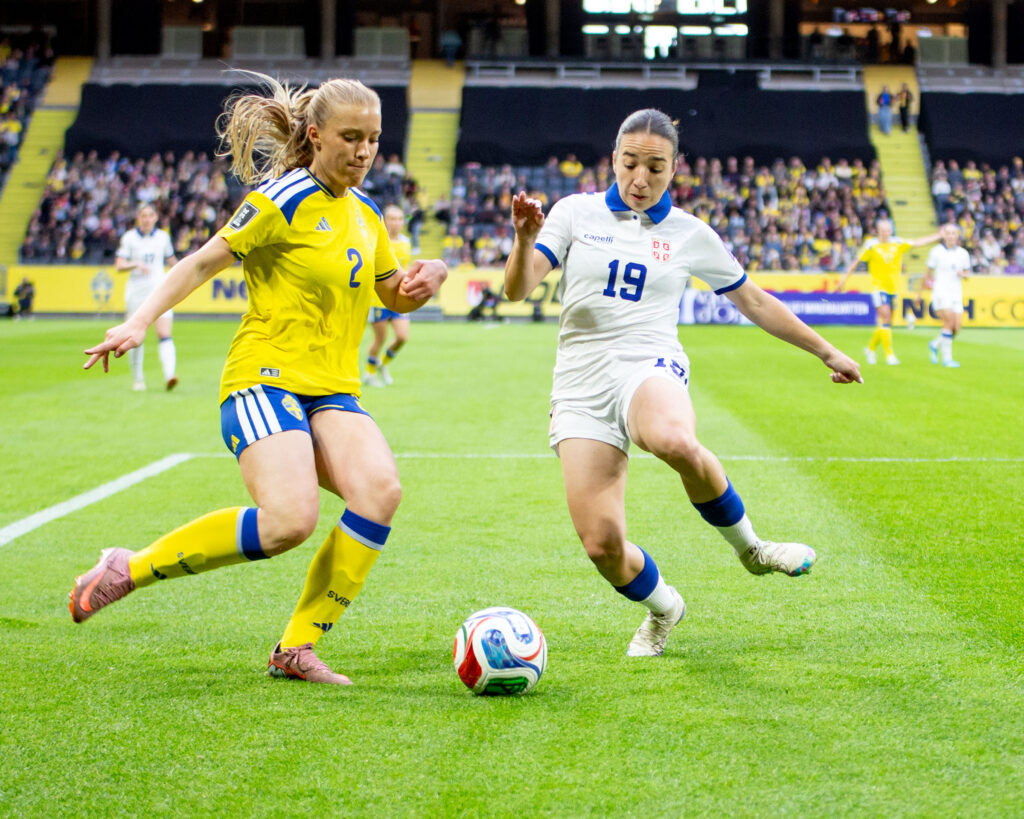
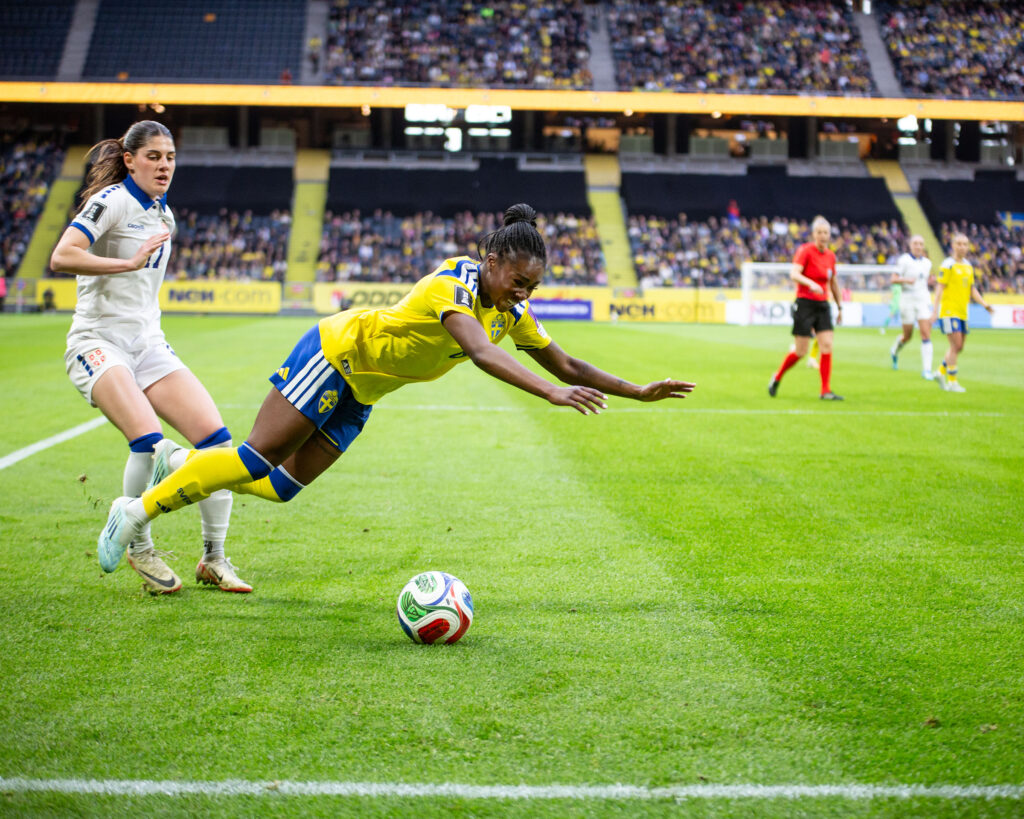
Sweden was clearly dominating the match, having loads of chances on the goal, but with several of them ending up hitting the crossbar or the goalpost (or both). Also around 30 minutes into the match, in a situation that looked very clearly like a penalty for Sweden, Monica Jusu Bah was instead given the yellow card for what the referee saw as taking a dive.
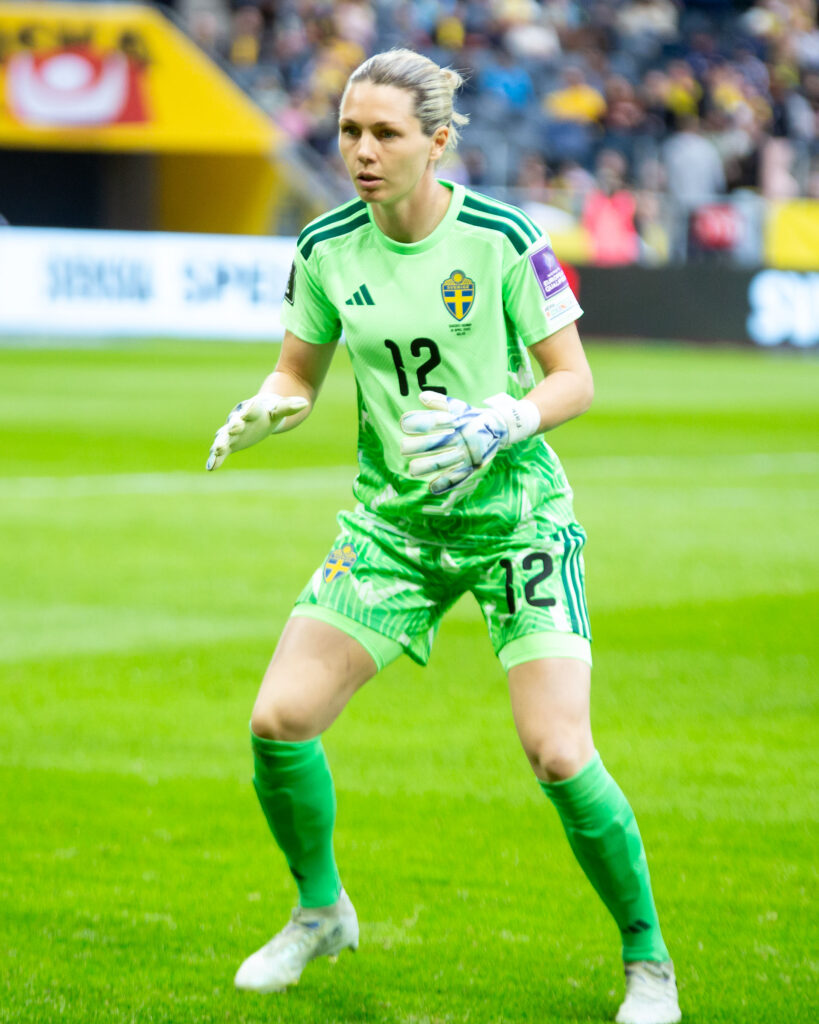
Serbia was also able to strike back a few times in their transitions, but Sweden’s goalie Jennifer Falk made some impressive saves that were decisive for the final result.
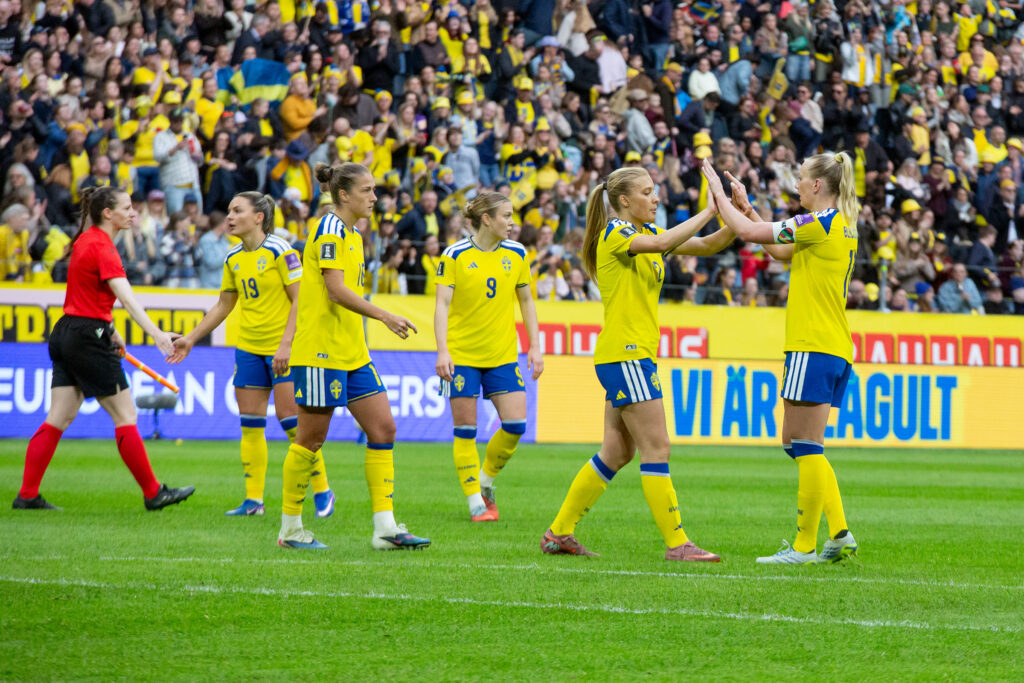
Early on in the second half of the match, team captain and Arsenal star striker Stina Blackstenius finally placed the ball in the back of the net. Sweden continued to dominate clearly, while the Serbian team seemed to grow more tired.
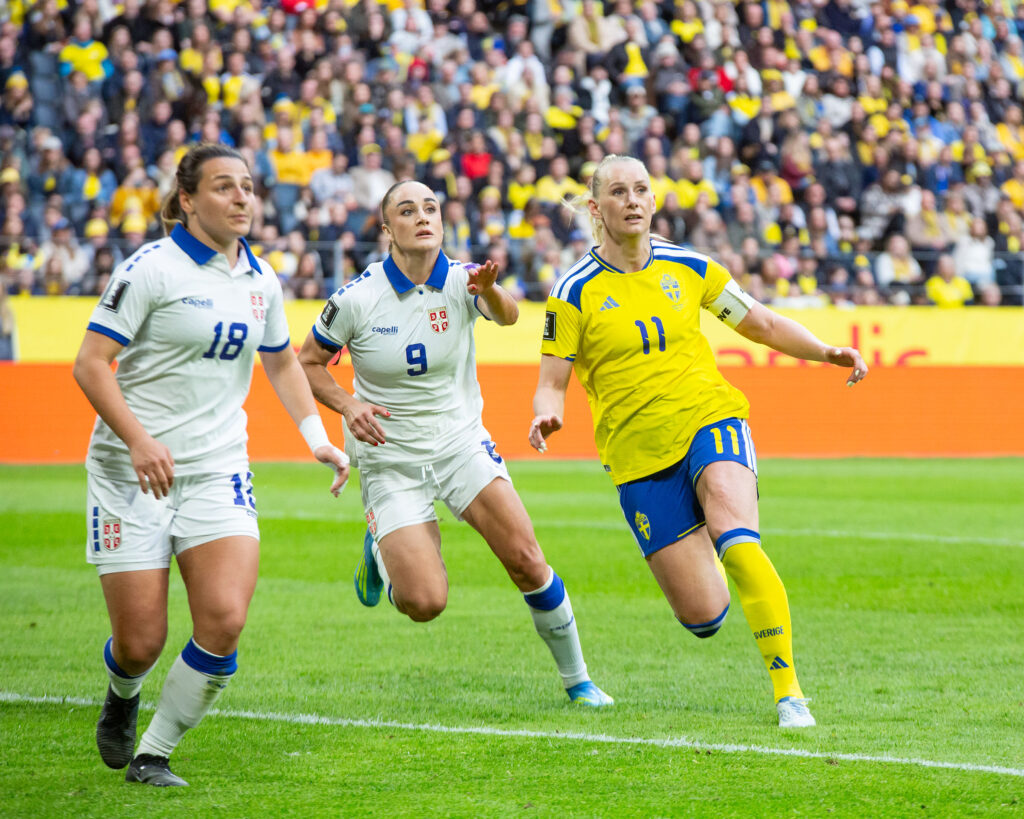
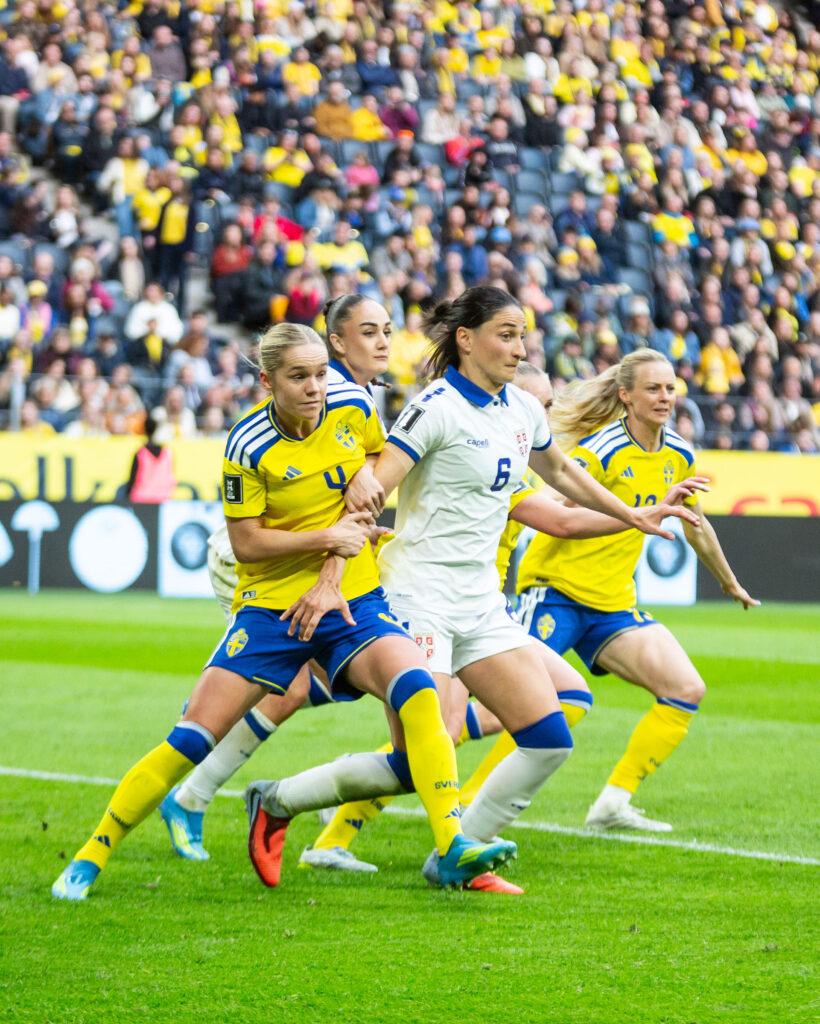
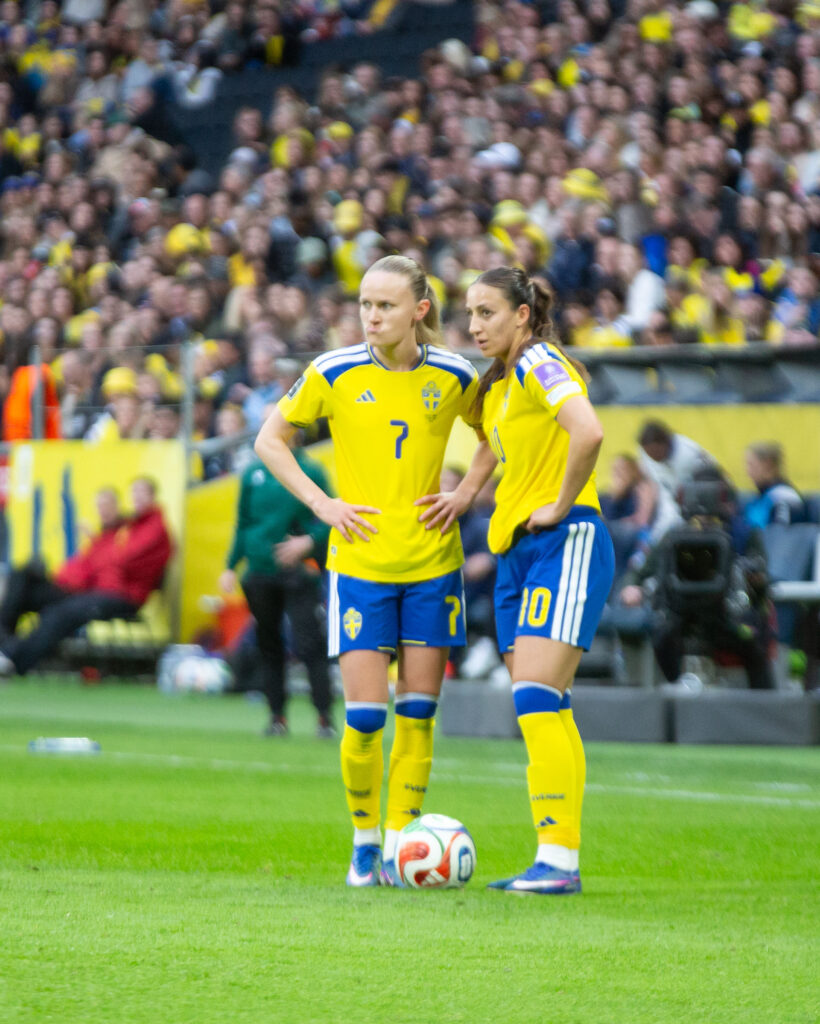
While Sweden could not convert most of their chances into goals, they managed to keep the 1-0 scoreline until the end, and thus gripped the very important three points for the victory.
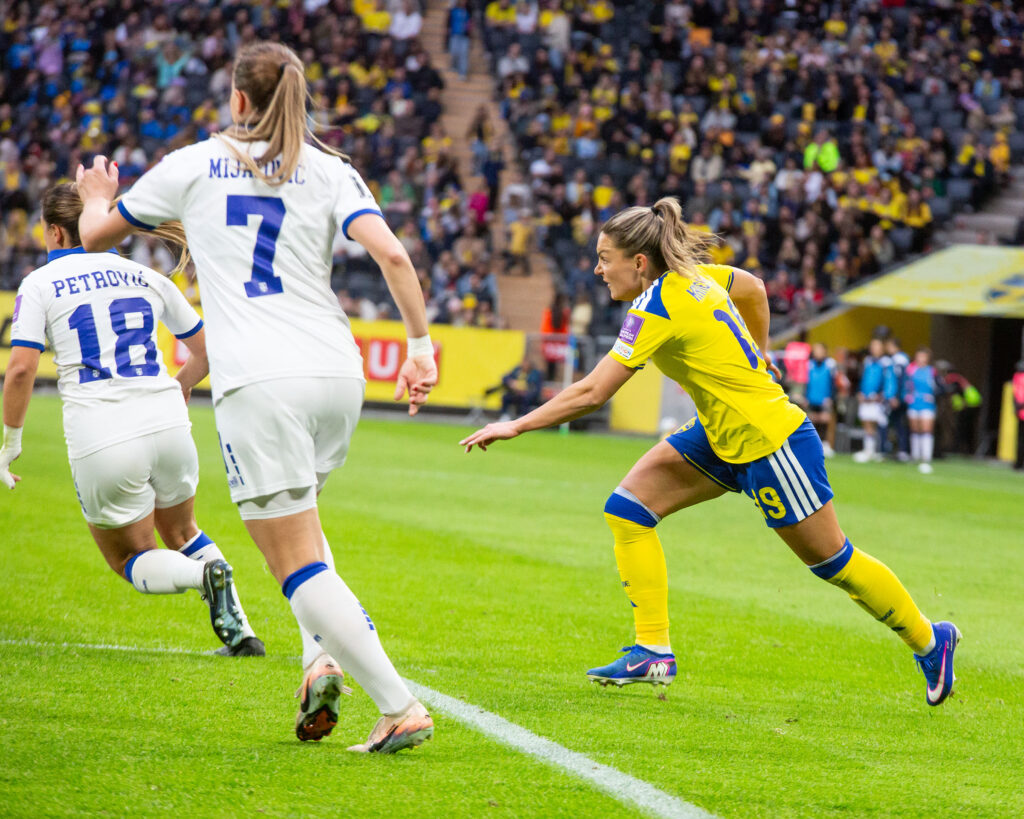
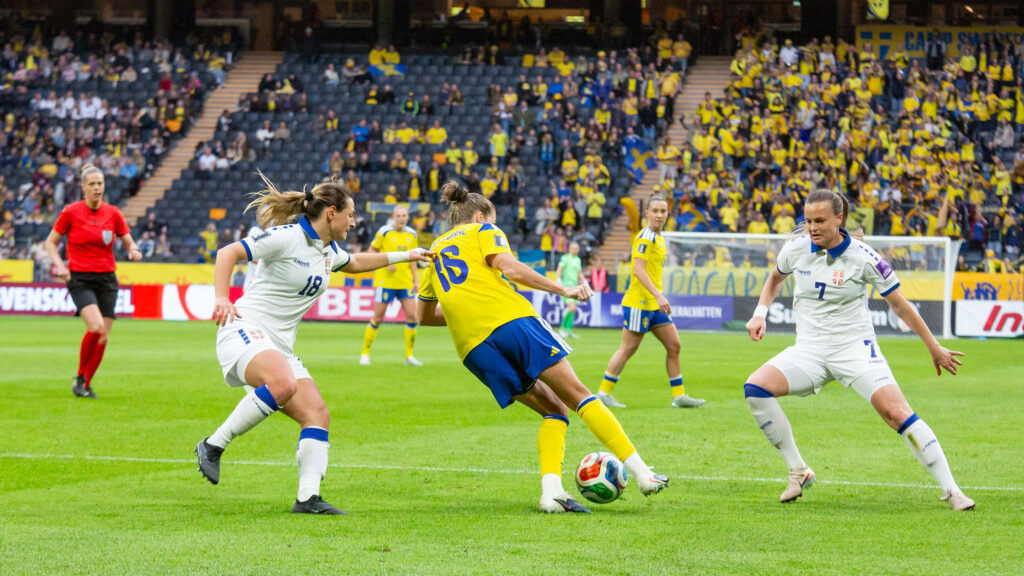
Remaining qualification matches
There are two more group matches left for Sweden in these World Cup qualifications #WWCQ , where the winner of the group is getting a ticket straight to the 2027 games in Brazil. That group win is still within Sweden’s reach, as Denmark tied with Italy in the other match of the day, and thus only leads by one point over Sweden. Sweden will face Denmark in an away game and Italy in Gothenburg in June.
A generation shift
The Swedish team is going through a generation change, which has been very evident in the starting lineups of their recent matches, when injuries of some more senior players have further expedited the influx of many fresh new names making their debut on the national team.
The very experienced team captain Kosovare Asllani drew a very bad ACL injury recently, and Chelsea defender Nathalie Björn has also been out with an injury for quite some time. She actually made a comeback from her previous injury in March, but got a heart-breaking new calf injury after just two minutes of play.
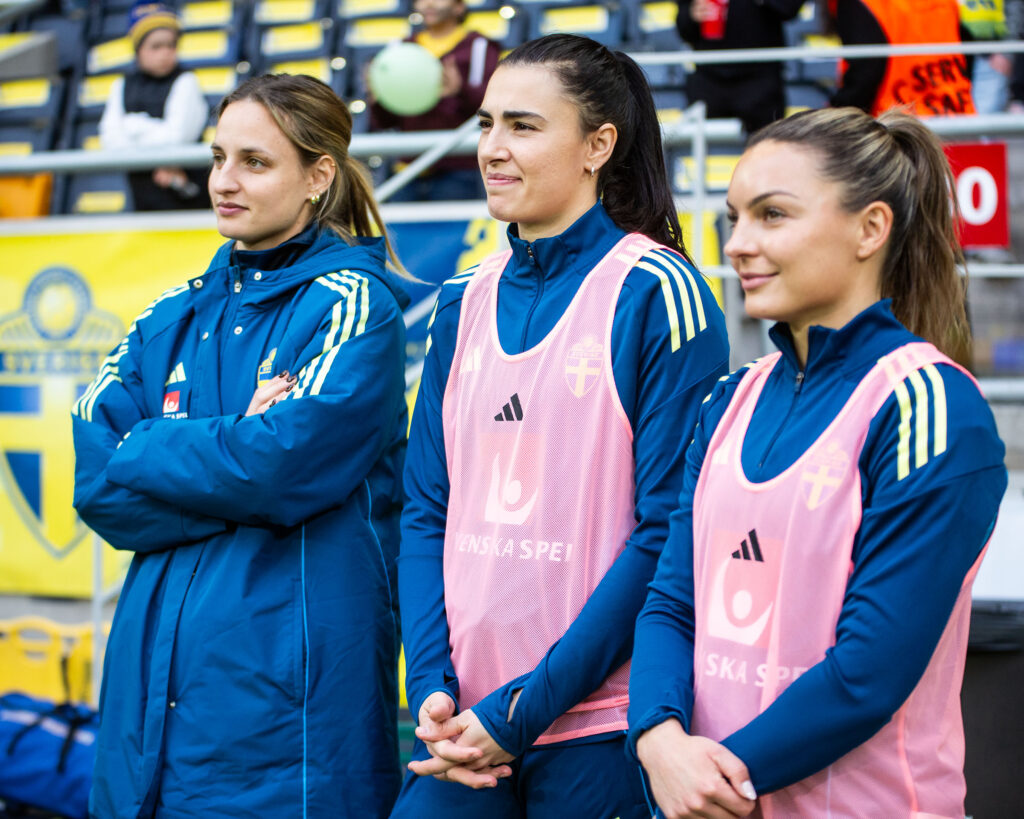
Chelsea’s other Swedish star Johanna Rytting Kaneryd has also been out for a month, but made her return now and was subbed in against Serbia for 28 minutes of play. Former Chelsea goalie Zećira Mušović, now with Malmö FF, has just recently returned to play after her maternity leave. She has rejoined the national team, but is understandably number two now until proving herself again.
New young talents
Some of the most prominent young players leading the charge include Arsenal’s recent recruit Smilla Holmberg, and BK Häcken’s dynamic duo Monica Jusu Bah and Felicia Schröder. This Serbia match also saw another young talent making her national team debut, 19-year-old Beata Olsson, who currently plays for Liverpool. Hammarby’s Sofia Reidy made her debut earlier in the week against Denmark and Real Madrid’s Bella Andersson in March against Italy.
Thanking retired players
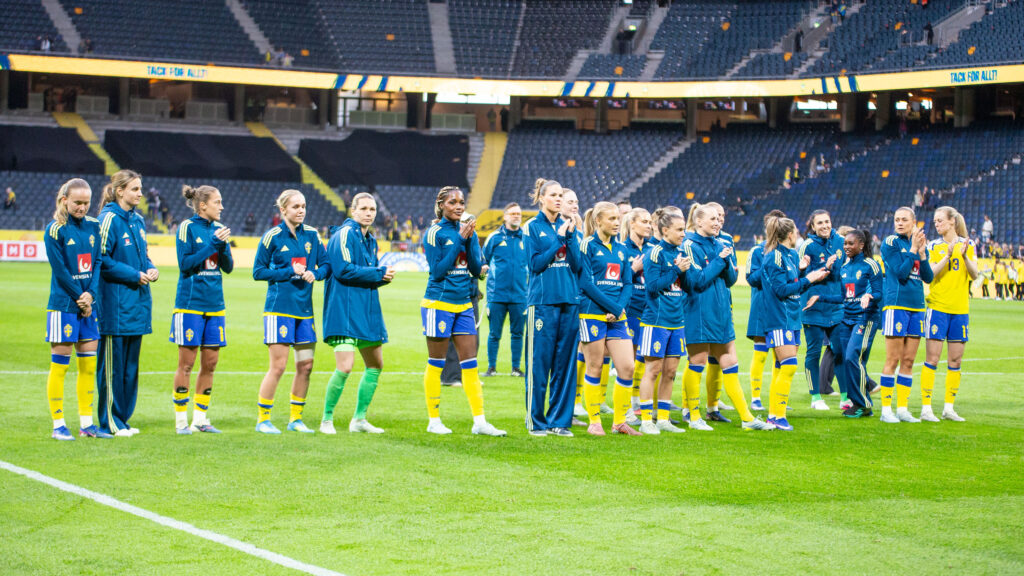
The changing of the guard was made all the more graphic after the match, when the Swedish Football Federation paid tribute to four(!) players who have recently retired from national team duties.

The most significant of them being Magdalena Eriksson, who has been solid as a rock for the team and also taken on captain duties. She stepped down from the national team after some injuries, saying she does not feel she can give her everything at the level she would want to for both her club team Bayern München and Team Sweden. Her tally in the national team came to 123 matches.
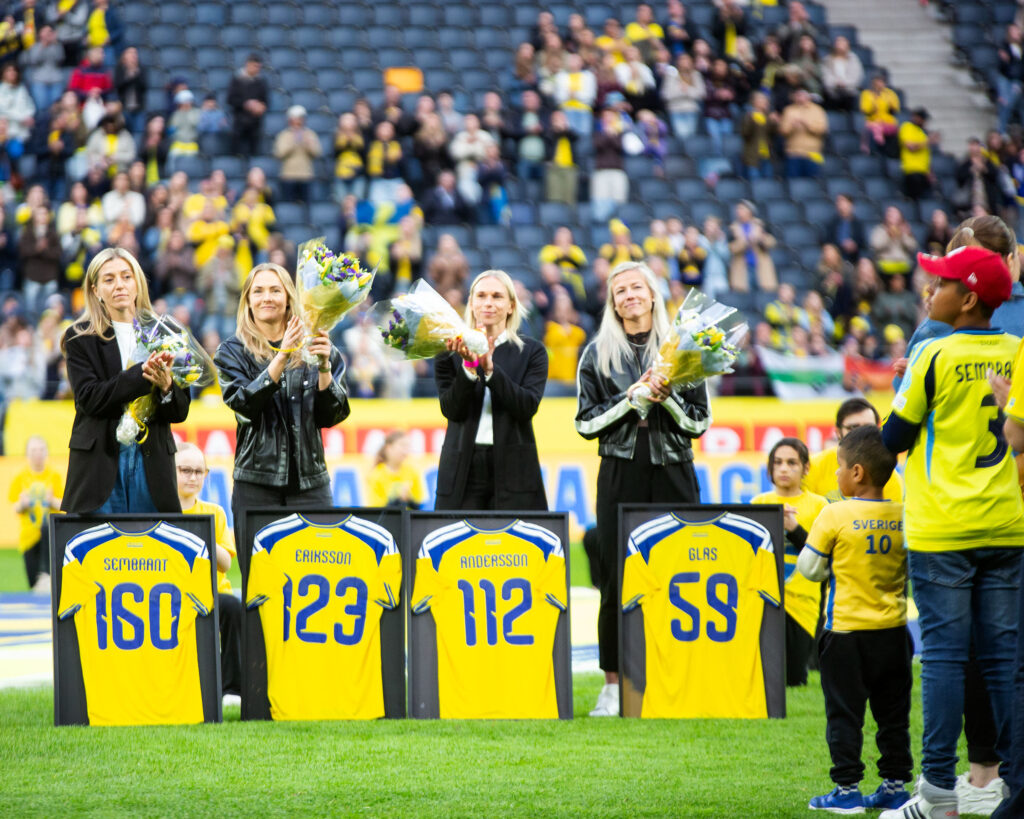
The other three honourees were Hanna Glas (59 caps), Jonna Andersson (112 caps) and Linda Sembrant (160 caps).
The golden generation has brough Sweden 2 Olympic silvers (2016 and 2021) and two World Cup bronzes (2019 and 2023). So building a new team with fresh talents to live up to those standards is not an easy task.
What’s in store for the future for Team Sweden?
The situation looks very promising, with the young players being very technically skilled and strategically trained. They are also stepping up and taking responsibilities, but the lack of experience can be seen in somewhat uneven performances.
Sweden can still take on any one of the top teams in the world and win, but the tactical identity of the team seems to be still in a bit of a flux and their performance may be inconsistent at times and thus the results more unpredictable.
The strong domestic football culture and talent development are forming a great basis for the future. More and more Swedish players are also finding pro careers in international top teams, including 23 Swedish players playing in the world’s most competitive women’s league, the WSL in England. If the new players click and form a strong team unit, Sweden can certainly remain a top-tier contender in any international tournament.
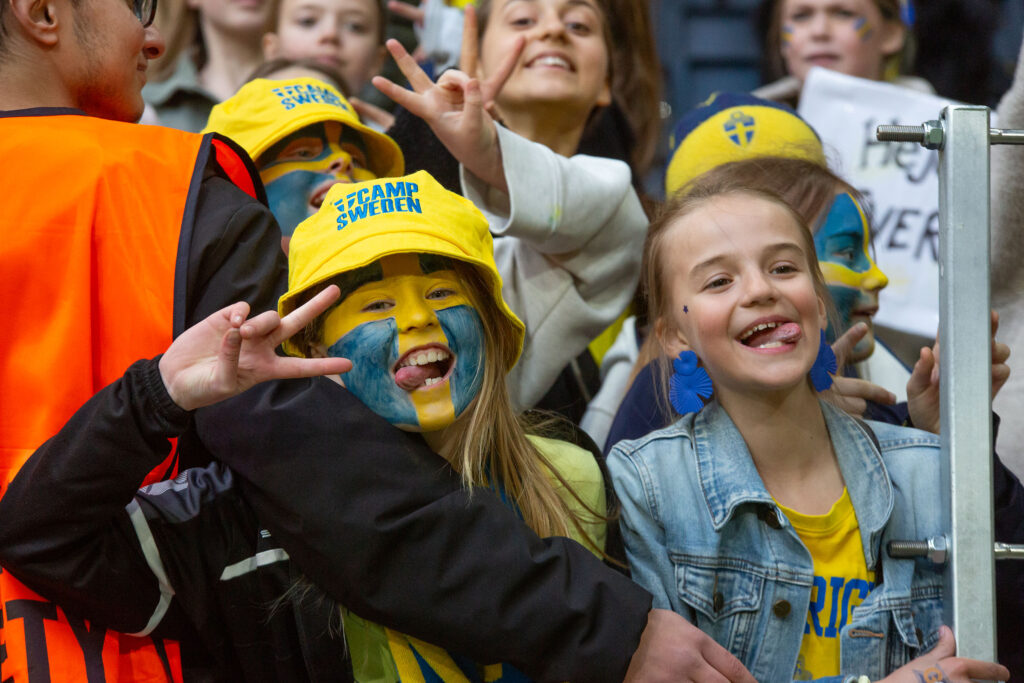
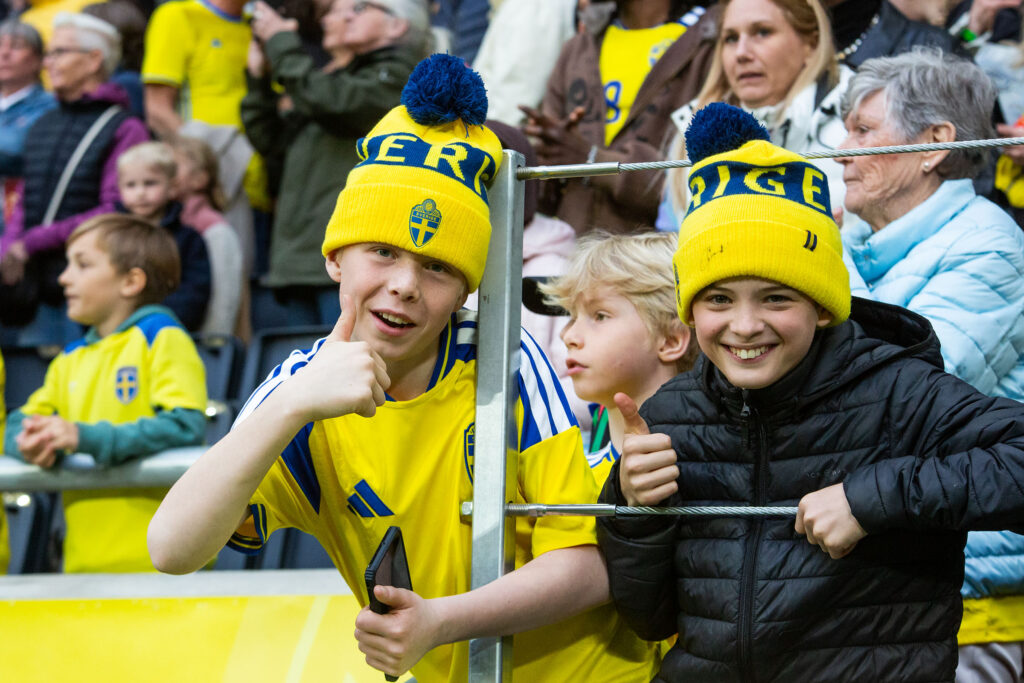
And judging by the sheer amount of young fangirls and fanboys in attendance at the stadium, it sure looks like the bright future will extend beyond this generation that is taking over now.
All photos © Nina Uddin