



The Northern Lights, or aurora borealis, are one of nature’s most mesmerising displays—a dance of green, purple and pink across the night sky. While many people think you have to travel to the far north of Sweden to see them, Stockholm occasionally offers its own chance to witness this breathtaking phenomenon. With the right timing, the right conditions, and a bit of luck, you may just catch the aurora in the capital.
As a photographer catching an aurora display is definitely on your bucket list, so let me guide through all the things you need to know to be able to capture it and even if you’re not a photographer and just want to enjoy its magic, keep on reading and you will surely see it.
When Is the Best Time to See the Northern Lights in Stockholm?
The aurora is most visible during the darker months of the year, when the skies are clear and free of light pollution. In Stockholm, your best chances are:
-
September to March – long nights and colder weather increase visibility.
-
Around the equinoxes (late Sept & March) – geomagnetic activity often peaks.
-
Late at night (10pm–2am) – when the sky is at its darkest. But this is also the most active time for it.
- During the winter if you have a very cold day with clear skies, chances are high that there can be an aurora display.
Where to Watch the Aurora in Stockholm
City lights make it harder to see the Northern Lights, so the trick is to escape the urban glow. Here are a few of the best spots within or close to Stockholm:
-
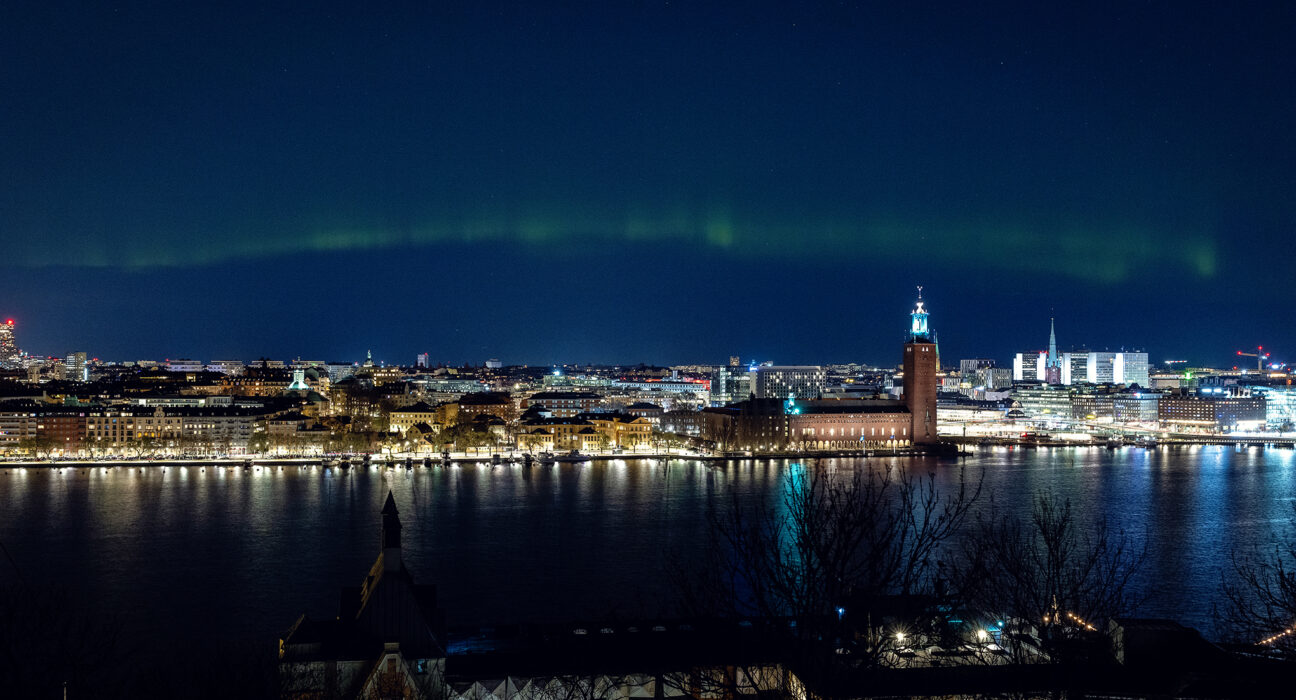
Skinnarviksberget – On Södermalm, this hilltop offers wide skies and one of the best night views of the city. That’s the spot from where I shot the photo you see at the top of this article.
-
Hellasgården – Just outside Nacka, this nature reserve provides dark skies without going too far.
-
Lappis Beach (Lappkärrsberget) – Popular with students, this beach north of the city is a good place to watch the night sky.
-
Tyresta National Park – If you’re willing to travel a bit further, this dark-sky reserve south of Stockholm is one of the very best nearby options.
- Djurgården – The city’s largest and most beautiful green area.
How to Know When the Aurora Will Be Visible
Seeing the Northern Lights is never guaranteed, but a few tools can help you plan:
-
Aurora Forecast Apps – Apps like My Aurora Forecast or Aurora Alerts give real-time updates.
- Websites – You can monitor aurora forecasts on sites like:
-
Swedish Institute of Space Physics (IRF) – Their website provides reliable aurora forecasts for Sweden.
-
Conditions to look for:
- Clear skies
- High KP index – The Kp index is a 3-hour, global measurement of geomagnetic activity, ranging from 0 to 9, with higher numbers indicating more significant disturbances in Earth’s magnetic field. It is used to predict the intensity of auroral displays (Northern Lights) and the potential disruption to technology from geomagnetic storms. A higher Kp index means the aurora is brighter, more active, and visible at lower latitudesKP 6+ for Stockholm visibility.
- Cold, crisp nights often mean clearer skies
- Facebook Groups – In groups such as: Norrsken, Aurorahunting, Norrsken Stockholm Söder, among others you will find a community of Aurora enthusiasts who post about the aurora forecast. They also post the location where they are at and how the sky is looking in real time, so if you live nearby you will know to also go out and enjoy the celestial show.
If you’re getting alerts of KP 6+, and cloud cover is low, grab a tripod, dress warm, and head to a dark area with a view to the north. Even a brief flicker can be visible!
How to Photograph the Northern Lights
Capturing the aurora is magical, but it takes a little preparation. I am a photographer myself so I could not complete this article without a quick tutorial in how to prep for photographing the aurora like a pro!
-
Equipment – A tripod is essential to avoid blurry shots during long exposures. A wide angle lens.
-
Camera settings (for DSLR or mirrorless):
-
ISO: 800–1600 or above if your camera supports. You will also want to go higher if the aurora is not so strong, in ties when it’s only visible on photograph and not to the naked eye.
-
Aperture: from f/2.8 and as wide as possible
-
Shutter speed: 5–30 seconds. Experiment depending on aurora strength and the light conditions, if there are no lights nearby, the night is pitch black and the aurora light is strong, then you can go with a faster shutter speed.
-
-
Focus manually – Autofocus struggles in the dark; set your lens to infinity. Pro tip – remove OS stabilisation.
-
Use a remote shutter or timer – To avoid camera shake.
-
Experiment – Every aurora is different, so play with your settings until you find what works.
And don’t forget: while photographing the lights is rewarding, sometimes it’s best to put the camera down and simply take in the wonder with your own eyes.
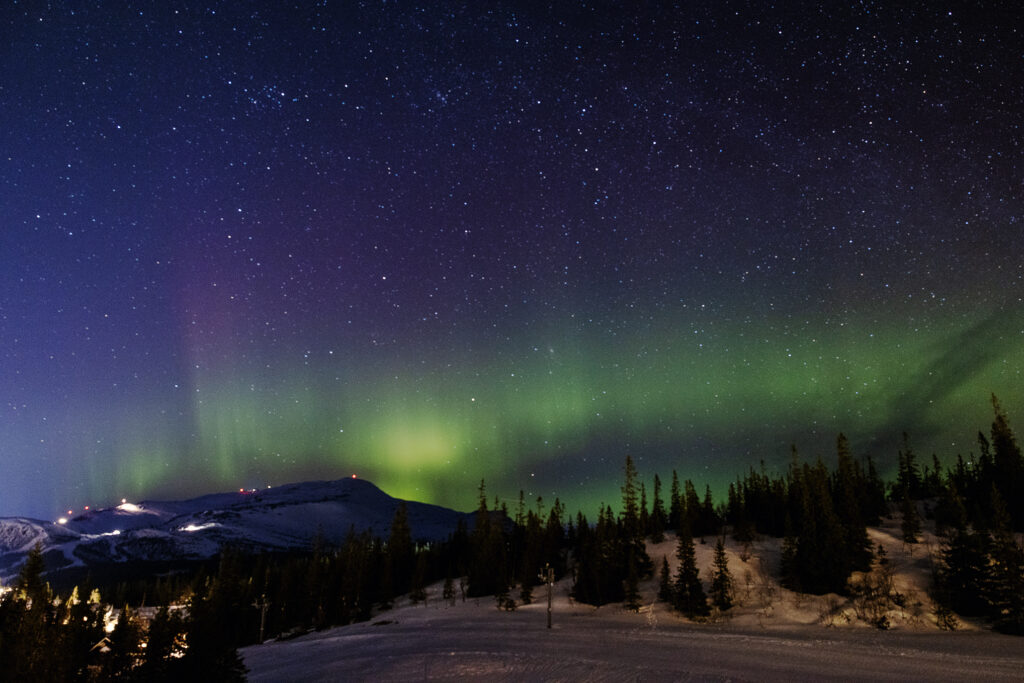
Final Tip
Patience is key. Stockholm isn’t the Arctic Circle, so sightings are less frequent – but when the conditions align, the aurora borealis over the Swedish capital is a memory you’ll carry for a lifetime.