




After another nerve-wracking voting sequence, the room erupted – and cheers broke out through a collective sigh of relief, when it became clear that Bulgaria had taken the Eurovision victory, sparing the competition from being won by Israel.
For the third year in a row, we found ourselves in this exact split-screen nail-biter of a moment. And by now, it’s impossible to ignore: the EBU can’t keep making excuses.
From superfan to selective viewer
I’ve said it before, and I’ll say it again: the EBU has broken my Eurovision heart.
My Eurovision fandom used to stretch across months – watching national finals of multiple countries live, picking early favourites, and being fully invested in the season. This year, that joy was gone. I skipped everything except Sweden’s Melodifestivalen (which I attended as accredited press again) and my native Finland’s selection, which produced the pre-contest favourite.
I also didn’t actively seek out the rest of the songs. A handful surfaced organically in my feeds – including Bulgaria’s banger – and those few gems became my entire pre-show playlist. Only two days before the first semi-final did I sit down for a single run-through of the remaining entries.
By that point, it was already clear: the EBU had stripped away months of anticipation and excitement. Many fellow Eurovision fans were even more disheartened – I know many who chose not to watch at all. My own boycott was limited but deliberate: not giving my views to the official Eurovision YouTube channel and switching off the broadcast for about four minutes at a precisely chosen moment.
Soft power and a system under strain
As the New York Times recently detailed, Israel has long seen Eurovision as a vehicle for soft power – part of a broader image campaign they have taken very seriously at least since 2018 (when they last won).
By 2024–2025, that effort had escalated significantly, with at least one million USD reportedly spent on influencing the public vote. This wasn’t subtle: social media campaigns across multiple languages, influencer partnerships, and overt encouragement even from the Prime Minister’s official account to vote the maximum number of times.
And the system allowed it.
For years, the 20-vote limit that was in place meant 20 votes per phone number, and/or 20 votes per credit card. In practice, anyone motivated enough could easily multiply their influence – turning a handful of individuals into a decisive voting bloc.
Data that the NYT had received of last year’s televote figures in Spain revealed just how little it could take: only a few hundred highly motivated voters could be enough to secure the all-important 12 points. Similar patterns likely played out across many countries – despite broader public opinion trending towards being pro-Palestine in many of the countries that awarded Israel the top points.
Dodging the issue
Ahead of this year’s contest, several countries called for an investigation into these voting patterns – and even a vote on Israel’s participation, whether due to manipulation concerns or broader geopolitical reasons (read: genocide / war crimes).
The EBU appeared to respond, but instead of addressing the issue directly, it reframed the discussion. What was expected to be a vote on Israel’s participation became a vote on rule changes. When the majority of the EBU members accepted the new rules, the EBU turned it into an implicit approval for Israel to remain.
While the proposal passed, it was not without controversy. Reports and suspicions of lobbying in the lead-up added further unease. And then came the fallout.
Five major Eurovision countries – Ireland, Spain, the Netherlands, Iceland, and Slovenia – pulled out in protest. (Say their names!)
The EBU managed to offset some of the loss by bringing back Bulgaria, Romania, and Moldova, who had stayed away mostly due to economic issues. But participation still dropped to 35 countries – the lowest since 2004.
New rules, same fragility
For anyone who understands Eurovision voting, it was clear: reducing the vote limit from 20 to 10 was never going to fix the problem.
Israel continued aggressive promotion on social media in at least 12 different languages, encouraging viewers to vote the maximum number of times. The EBU issued a mild reprimand, but enforcement remained vague.
Yes, there are now rules limiting government-backed campaigns and third-party influence. But how do you regulate what happens behind closed doors – or across decentralised online networks?
In short: the system doesn’t just allow influence – it rewards it.
An all-too-familiar ending
With all that in mind, the finale felt inevitable.
Once again, we arrived at that now-familiar split-screen moment – hearts in throats, audiences desperately willing anyone else to win, just to keep Eurovision from tipping over the edge.
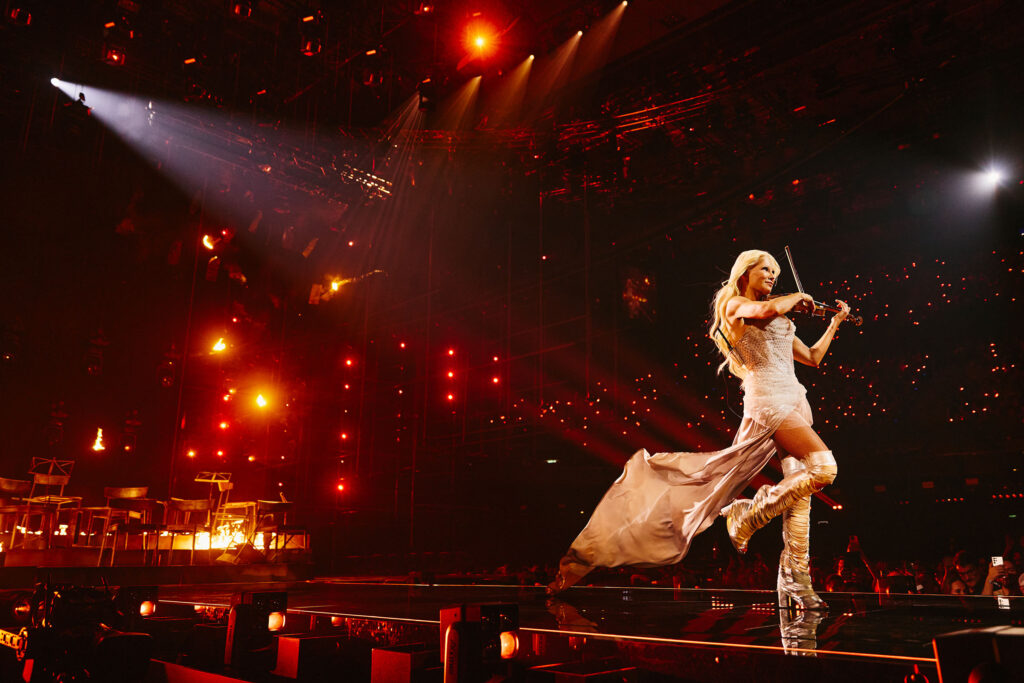
For much of the season, Finland looked like that saviour. Linda Lampenius and Pete Parkkonen had surged to a 44% winning probability, dominating betting odds.
But as jury votes came in, it became clear there was no consensus. Points scattered widely, with 18 out of 25 countries receiving at least one douze points.
The banger that delivered
Bulgaria emerged as the jury winner, with Israel sitting in eighth – but still close enough that a “landslide” televote could still lead to their victory.
Momentum had been building since Bulgaria’s standout semi-final performance, which elevated them firmly into contender status and a third place in the odds. For me, that formidable staging moved the country into my second place behind Finland (the song had already been comfortably inside my Top 10 before that).
The staging made all the difference. Sweden’s own Benke Rydman and Keisha von Arnold, along with a team of Swedish dancers, took an already strong entry and transformed it into a true standout – while many other entries fell back on familiar formulas.
Pulling Eurovision back from the brink
As televote results were revealed from the bottom up, tension escalated quickly.
Israel surged into the lead.
And suddenly, everything hinged on one final moment.
Bulgaria needed at least 140 televote points to overtake Israel – and as Dara and her team appeared on the split screen with the Israeli delegation, the tension in the arena was almost unbearable.
Then came the votes, presented in graphic form as a bar that was slowly climbing – and building. And then – breaking past Israel.
The crowd exploded.
In the end, Bulgaria secured 312 televote points, sealing a decisive victory with 516 points to Israel’s 343.

A victory – and a warning
This marked the first time since Salvador Sobral’s win in 2017 that both juries and the public agreed on the winner, as well as Bulgaria’s first-ever Eurovision victory.
Yet even in celebration, concerns linger.
Next year now raises a new question: how will Bulgaria tackle the hosting duties, having just returned after a three-year absence due to financial constraints?
But that’s not the main issue of concern.
The reckoning ahead
What the EBU should take from this isn’t relief – it’s urgency.
The deeper problem remains unresolved: a voting system vulnerable to influence, and a broader crisis of credibility. More countries may yet choose to withdraw if no meaningful action is taken.
This year already showed the cost of inaction. Five countries were sacrificed rather than confronting the issue head-on. The result was a competition that felt divided, uneasy, and increasingly politicised.
And by the end, the slogan United by Music sounded more hollow than ever.
What should have been a celebration of 70 years of Eurovision became something else entirely.
A contest under strain.
A fanbase divided.
A tradition at a crossroads.
The EBU cannot keep looking the other way.
Featured photo: Corinne Cumming / EBU