

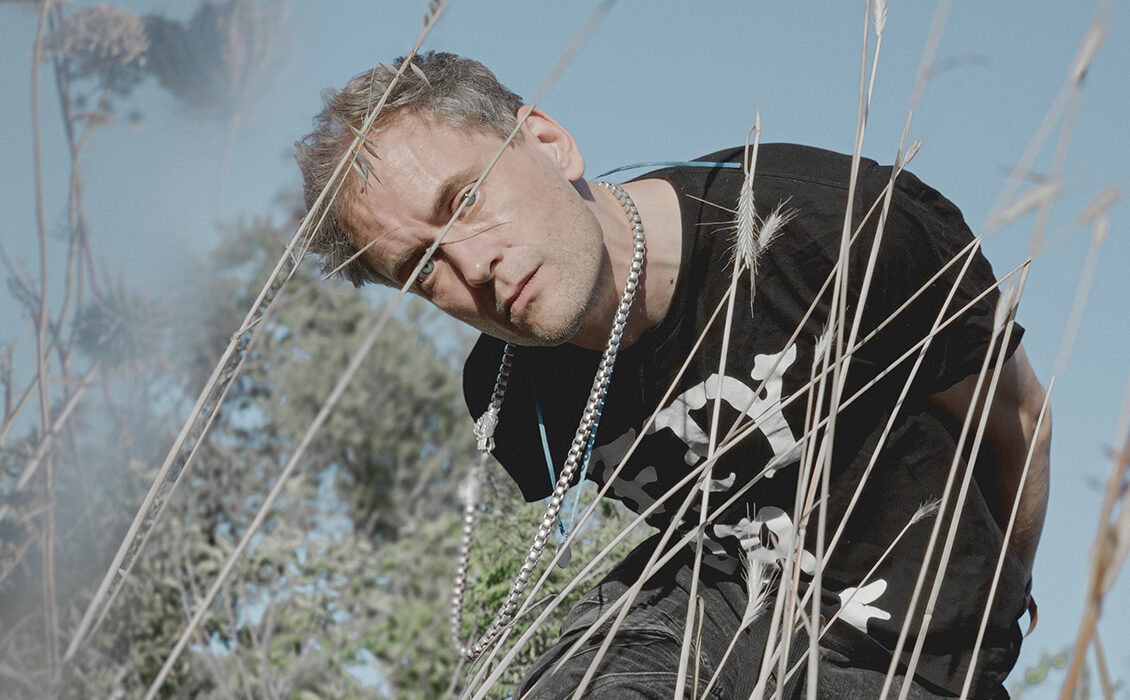
Alabaster DePlume is an English saxophonist, composer and poet known for his politically charged mix of poetry, music and improvisation. Delivering a both fearless and open-hearted message, DePlume’s art emphasises the importance of reflection, compassion and speaking out.
Coming to Alabaster DePlume’s concert is not a classic jazz experience. If that’s what you’re after, I would strongly suggest finding another way to spend your Friday night. However, if you are searching for an immersive, uncompromising in his views and direct in his style, artist to colour your evening, Alabaster DePlume is the right choice.
Slaktkyrkan is a venue that sets up the atmosphere before you even step inside – the dress code is underground, the décor is industrial grunge, the vibe is run-down glam, and the smokiness is in the air and on the eyelids. To sum it up, there is nothing religious about it. Except perhaps the determined conviction to follow the rules?
When Alabster DePlume finally showed up on stage, he wholeheartedly thanked the audience for being themselves and opened with small talk that didn’t feel small at all. With no hesitation, he established a true-to-self tone of communication and made eye contact with what felt like every single member of the audience. He hung Palestinian flags on his two microphones, making them a focal point in every single photo taken of the frontman.
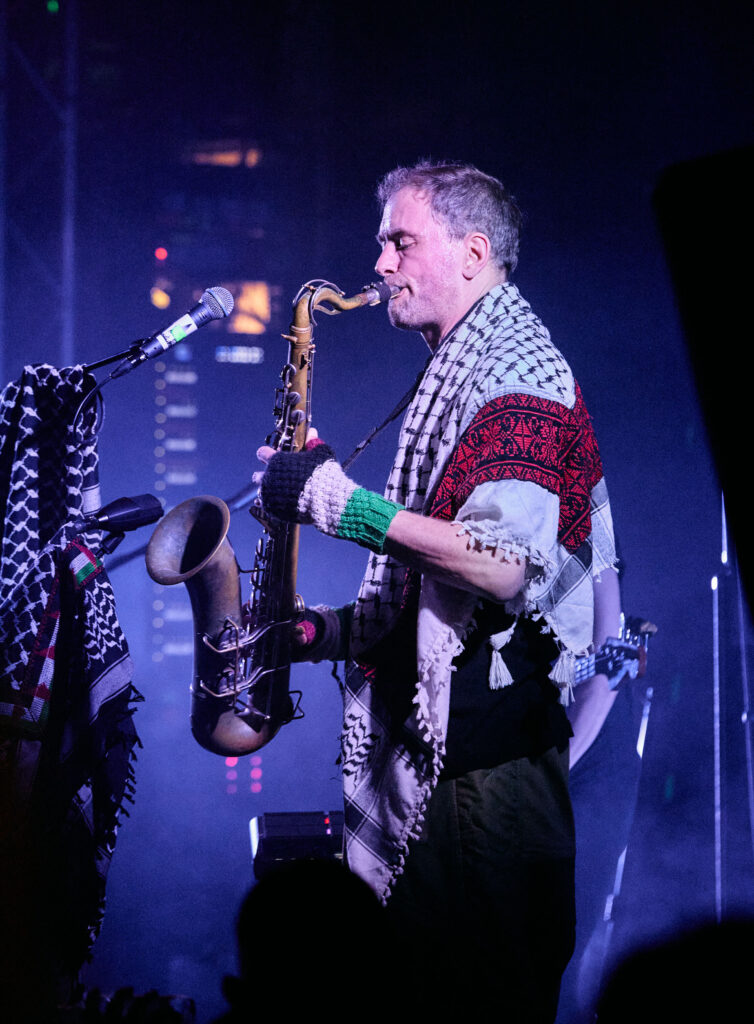
Opening with Thank You My Pain, DePlume didn’t waste time on pleasantries and delivered a borderline uncomfortably direct performance for the Swedish audience known for mastering the art of compromise on a daily basis. Presenting himself as a disagreeable person, DePlume sincerely proclaimed that he feels like himself here. “I was welcomed here [in Stockholm] before anywhere else, before it became cool to welcome me”. DePlume performed at Fasching in 2024 and shared his positive memories of that visit.
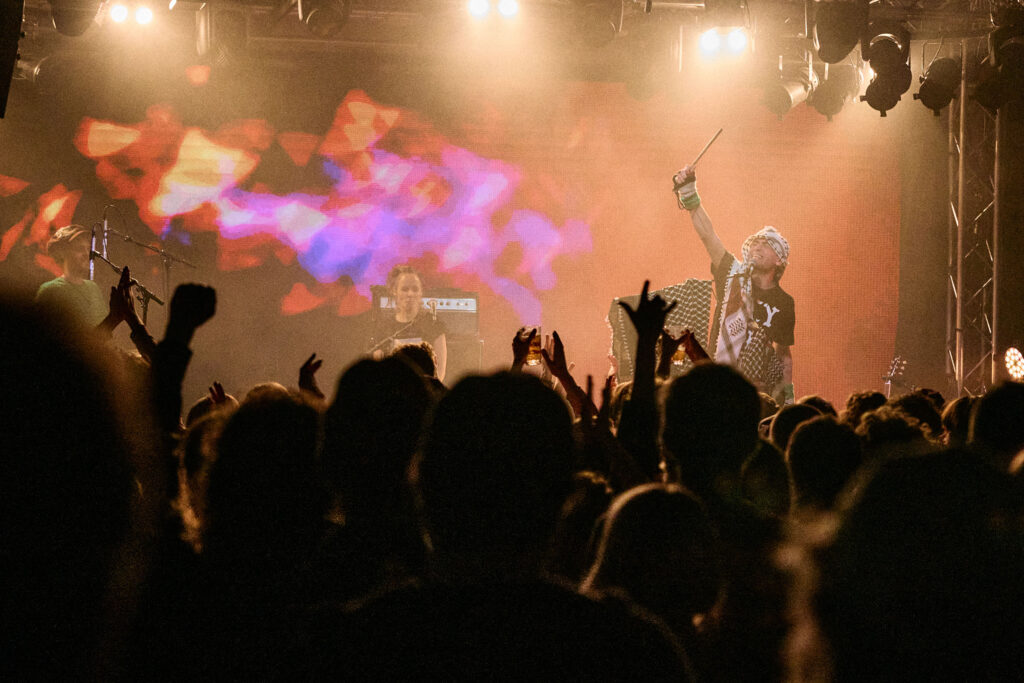
Dancing as he played the saxophone, DePlume added a touch of lightness to a politically charged performance. “We’re living in the time of genocide and fascism”, he declared, followed by the direct rhetoric on life, death, and everything in between. DePlume’s eccentricity made many in the audience smile and secretly wish they could express their feelings as openly as he did.
He made a constant effort to engage with the audience: from mimicking the sounds of a beer can opened by someone in the back while he’s about to start playing to stating, “You think you’re here to see me? No! I’m here to see you!” At first, I questioned whether this came from a place of sincerity, but quite soon, I landed on the impression that DePlume, like every single one of us, is searching for a human connection. He even explained who his music is for, “I am here for the rascals, people who are rough around the edges because they have very noble hearts”.
The poem that resonated the most with me was That Was My Garden, about acknowledging that inaction doesn’t justify destruction. Even though we might not have the inner power or decisiveness to resist the unfairness and openly defy it, it doesn’t make it less unfair. “That was not a car park, that was my garden”, DePlume declared with a firm voice, tugging at the audience’s heartstrings.
Unapologetically political, DePlume’s concert made me feel less interested in apologising for myself.
Featured photo by Sofia Lambrou