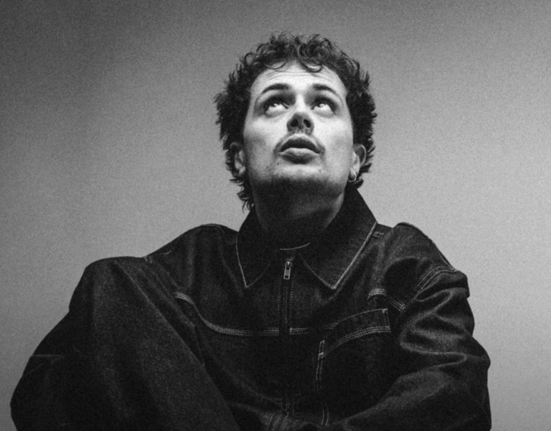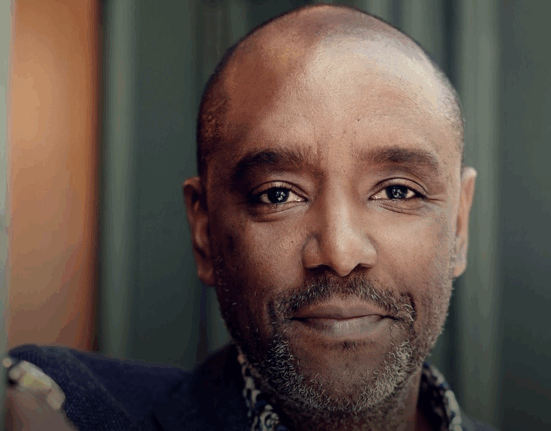

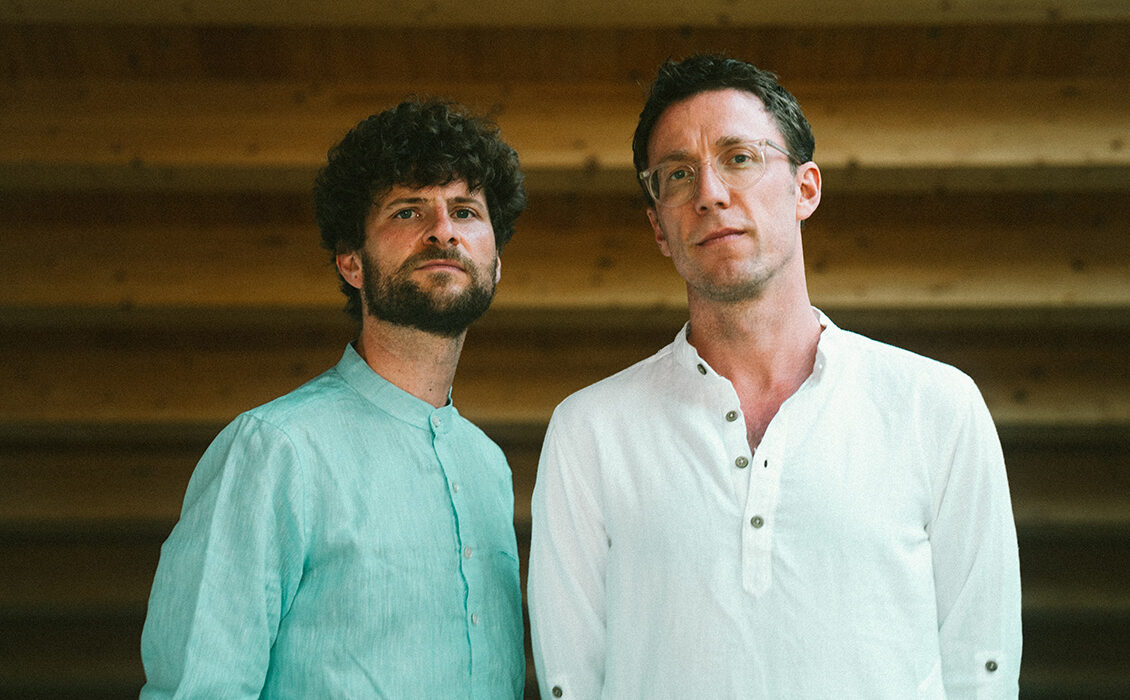
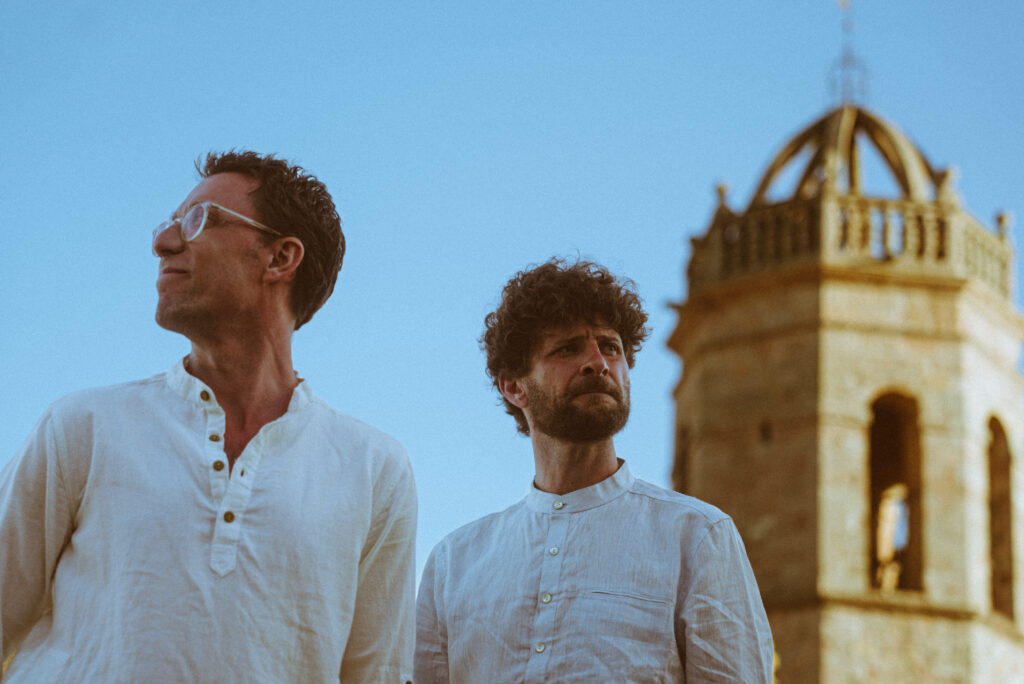
Bill Laurance and Michael League, long-time collaborators, friends and founding members of the Grammy-winning collective Snarky Puppy, came to Stockholm as a duo for the very first time. Laurance on the piano and League on oud and bass brought a performance of almost telepathic connection, turning a full concert hall into an intimate dialogue.
We met a few hours before their set at Stockholm Jazz Festival for a cosy chat in the Folkoperan’s back room. Warm coffee for me, tangerines for Michael and nothing for Bill.
I could compare getting to know the artists before attending their concert to reading a book before you watch the film – you notice so many more details of the plot that when you finally see it on the screen (or on stage, in this case), it embodies what you already know and brings it to life.
After their latest concert in Slovakia, Bill flew home to London, and Michael went to Italy and Nice to visit a good friend and play some tennis. Both Bill and Michael play tennis, although it seems like when they play against each other, the luck tends to be on Michael’s side.
Talking about their favourite places to perform, Bill mentioned the Mediterranean for its climate, wine and food, while Michael thinks that Japan is best for its food and the skilful technicians that make the sound amazing everywhere you go in Japan.
On being present
There is quite a lot of information about artists online. What would you like our readers to know about you and your style?
Bill Laurance: Something I’m becoming more conscious of is the significance of being present in my work. I’ve recently come back from a hike on the Lycian Way in Turkey, and a good friend of mine is really into meditation, so he’s trying to convince me to practice it more than I do. And then I come home and tell everyone that meditation is absolutely the key to being cool and content, and I don’t practice it myself.
Going deeper into the music is surrendering yourself to the music and letting the music tell you what to play.
But I feel that music is my opportunity to do it. So my recent work is going deeper into the spiritual side. And a lot of my idols have that in common too. I am not religious, but I find that going deeper into the music is surrendering yourself to the music and letting the music tell you what to play. Like there is something greater going on. I am still figuring out what that is, but as I continue on that journey, that’s what I am becoming interested in. Being completely in the moment, that’s when the magic happens. That’s a lifetime exploration.
Michael League: In music, you have two extremes: on one side, it’s the highly organised detail-oriented people that treat music as if a project, a classic Wall Street kind; on the other, it’s total disasters who are living in 100% creative space all the time, can’t even brush their teeth without someone reminding them, and who miss all their flights. Bill and I sit slightly off the middle towards the organised side.
We’ve spent a lot of time working with people on the creative extreme. Many of our heroes are that way – the ones who died when they were 27 (nervously laughing) – people living 100% in the clouds and creating amazing art.
Bill and I have a mission of moving more towards the middle, because all that organisational side comes from a place of worry and fear. It’s an attempt to control all the unknowns. We’re afraid of so many things that can happen in the music industry. It’s a daily exercise for us to aim at being more present and turning off the analytical parts of our brains, cause it’s just the two of us. But also, to complain to each other and share the worries.
From the concert: This was exactly the feeling the audience could catch in the performance – the two friends, immediately connecting. They looked completely in sync and mutually supporting each other’s meditative heart-to-hearts with the music.
On the jazz scene
You mention you have a lot of worries, what troubles you the most in today’s jazz scene? I know the list is long…
Michael League: The thing I’m most worried about is that the new generations of audiences will not be interested in the thing that makes the music magical for me. It’s hard to describe but it’s when you’re not playing totally in tune, when musicians are going to a very, very deep place to present things – that’s when the real music is being made. I worry that with all the technology and social media, the art has transformed to be consumed and, as a result, people will no longer be sensitive. That their antennas are not going to be long enough to pick up what this mysterious magic of art is. Of course, there will always be people who get it, but en masse, there is a shift happening.
The artists also need to eat, and they will respond to demand. Ideally, artists create the demand with the supply, but Bill and I are doing things now that we never would have done 15 years ago because we understand that they work. I remember the first time I talked to my phone camera and I felt like a fucking asshole. I thought that everyone who did it was an asshole, and now I am one of them. One day, for the first time, I took a selfie with someone. I would never have done that in 2010 but you change, you respond and you adapt. I hope we won’t overadapt to kill the deepest parts of art. That’s my worry number one.
Bill Laurance: But maybe when this magic is being created, it will be recognised as more special? The whole AI-generated content exponential growth is alarming. Maybe I am being an idealist, but I hope that, in a way, this will create a deeper hunger for the real thing while everything else is becoming unreal. Cause ultimately, we all long for a human connection.
On music style
Do you think jazz is becoming more accessible to new audiences, or is it still a niche space?
Michael League: Jazz is not niche anymore, jazz is cool now. It was niche and in hibernation when we started. It was pretty nerdy to be into jazz from mid 80s to mid 10s and not in a cool way.
I wouldn’t consider any of what we’re doing today jazz. But we’re at the jazz festival!
Bill Laurance: Jazz is kind of freedom at this point. It could be anything and you could hear the elements of jazz in any style. Music is music, getting out of categorisation.
That is exactly what we can observe at this year’s festival programme: there is a very wide spectrum of music being presented in 10 days, from mystical and trippy to very classic traditional jazz and everything in between.
Michael League: I wouldn’t consider any of what we’re doing today jazz. But we’re at the jazz festival! At certain moments, there is jazz vocabulary expressed, so it does fit the festival, but we’re focusing on songwriting. We’re equally influenced by pop, folk, Western European classical writers, some genres of Middle Eastern music and Latin jazz.
Bill Laurance: The jazz part that we do is the element of dialogue and the improvisational spirit. We do it in the designed spots that often present an opportunity to improvise.
Michael League: It’s also about patterns on the tour. If you place the first few gigs safely, then you create this box that’s hard to get out of later on in the tour. If you come out in the first gigs and spread your wings, it sets up the tour for more possibilities of improvisation.
And then towards the end of the tour, it’s like: box? What box?
Michael League: In theory, yes.
Bill Laurance: When we started this project, I had the instinct to play very hard and overcompensate for it being just the two of us. But now the dynamics have changed and the quieter we play, the more space we leave, the more value it puts on those notes and musical decisions. This space helps to give music value because, when you have so much space, you can really swim in that space in a way that you can’t in a bigger band.
On creativity
What do you need around you to create a new piece: peace and quiet, chaos or conversation?
Bill Laurance: Definitely three in the morning, after a bar. (Michael nodding)
We both operate at our best when we’re surprised.
Michael League: When we get disorganised, the most interesting stuff happens. The weird moment of the day, the unusual circumstances push us to explore. Both of us operate better when we don’t have time to create preconceptions about how things will be, because we’re both very experienced improvisers but we’re also prone to planning. We both operate at our best when we’re surprised.
What experiences make you creative: books, cities, art, nature?
Bill Laurance: Travelling. Eating new food, hearing new languages, experiencing new cultures and changing weather. For me, hiking is really powerful to clean the canvas and reset. Taking yourself away from technology and usual routines when you’re doing something that is not work and not family.
Michael League: Travelling is also destabilising cause you have to solve problems all the time. It puts you in a more present state of mind because you can’t judge things according to your imagination. And you have to react to what you see.
Bill Laurance: I find myself craving more dangerous situations. I went on a hike and since there was no water on this hike, we had to carry water for three days. Obviously, we lost the path and we were on the clock. You’re literally counting the litres. These kinds of situations are very uncomfortable but very inspiring. It definitely wasn’t a holiday, it was a boot camp. But since I came back, I’m totally buzzing about it.
Do you want your listeners to think or feel?
Bill Laurance: I don’t think you can really control that. All you can do as an artist is to articulate what you’re trying to say. How people listen and respond is such an unknown. I would hope that our music does something – what and how, it’s up to the audience.
Michael League: First feel, then think for me. Feel during the performance and think afterwards. The emotional catharsis leads to thoughts about life, that’s the ideal order of operations.
From the concert: The whole performance was geared towards blurring the lines between transitions, formalities and clear boxes, if you will. For instance, when one takes the bassline and the other the melody, the artists followed a peculiar but smooth flow – they slowed down, added a few playful accents and giggles, and the swap was complete. As a result, you weren’t trying to rationalise and think through the structure – you got caught up in the moment and engaged with your feelings.
On the latest album
Why oud?
Michael League: I like making my life hard (laughs). I picked the instrument with the most strings to tune and no frets to make sure I’m in tune.
Bill Laurance: Maybe I should play some drums instead of piano tonight? Open some new doors!
Michael League: I don’t know if we’ll like what’s inside.
As much as we like to improvise, we are song guys. We like composition and follow it most of the time. So when I take oud, an instrument I don’t usually play, it becomes a vehicle for unlikely directions and composition. Even when I switch back to bass, we’re still following the format established by the relationship between the oud and the piano. Sometimes one of us plays basslines, the other one plays melodies. It opens doors (not the swap to drums two hours before the concert, but hey, you don’t know before you try).
Bill Laurance: The melodies feel more aesthetic in new constraints, and the instruments like the oud bring a certain feeling to it. These limitations create a challenge for us to get a clear message out with no lyrics and a new feeling.
Bill Laurance: For both records, the creative process was about creating as many demos as we could. And complementing each other’s creations. On the last record, Keeping Company, we were both quite prolific on the demo side and had around 40 demos. Some of them were quite short, a 10-15 second idea, but we put them all together, talked and chose what resonated the most with us and why.
Michael League: We had an overabundance of material and in fact, recorded 4-5 songs that didn’t go on the record cause it was too much music. Less is more, as they say. But we definitely need to release some of those!
Stylistically, everything is on the table.
On the next steps
Michael League: We talked about including more people, but then we talked about not doing it. Because there’s still a chance to create new music with this composition and these people to stretch the potential of how far we can go.
Bill Laurance: Stylistically, everything is on the table. We’re limited by the instruments but that’s the inspiring part about it – how much we can explore in this context and do what we haven’t done technically yet.
So, a few more records as Laurance and League?
Michael League: Maybe just one.
So we’re not expecting Laurance and League and someone, are we?
Both: You never know…