
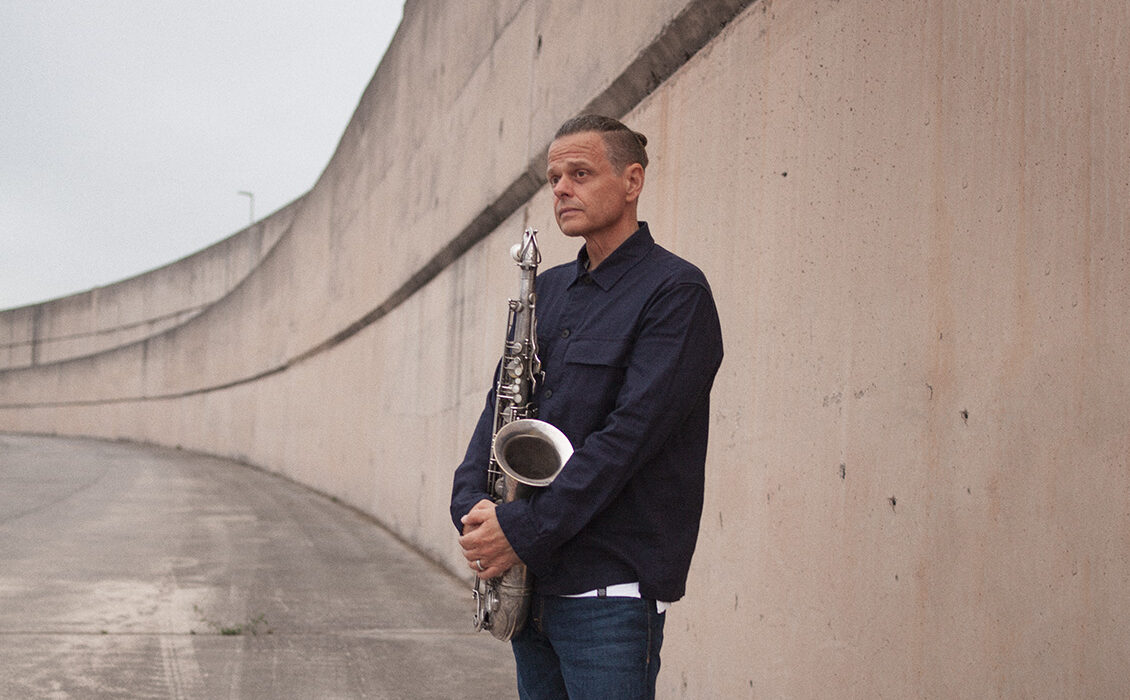
Chip Wickham is a British saxophonist, flautist and composer known for blending spiritual jazz, funk and modern groove. A key figure on the UK jazz scene and longtime Gondwana Records collaborator, he combines classic 1960s influences with contemporary sounds. His latest album, The Eternal Now, showcases his most adventurous and progressive work to date.
A Sunday night at Fasching turned into a Saturday 2.0 with the lively buzz that Chip Wickham’s arrival brought. The club had been trying to book him for over two years, and he finally made an appearance, his first in Sweden, during this year’s Stockholm Jazz Festival.
Without too much British small talk, he kicked off the set with The Hit from his Cloud 10 album, setting an upbeat, energetic tone.
The next tune, Interstellar, my personal favourite, slowly but steadily transported the audience into outer space. Written as a tribute to Wickham’s favourite film, Interstellar works as an ode to the enormity of what’s above us. While Finn Rees’s keys mapped out the song’s structure like a myriad of stars on amplifiers, the whole composition invited listeners to dream about the beyond and feel the calm that comes with it.
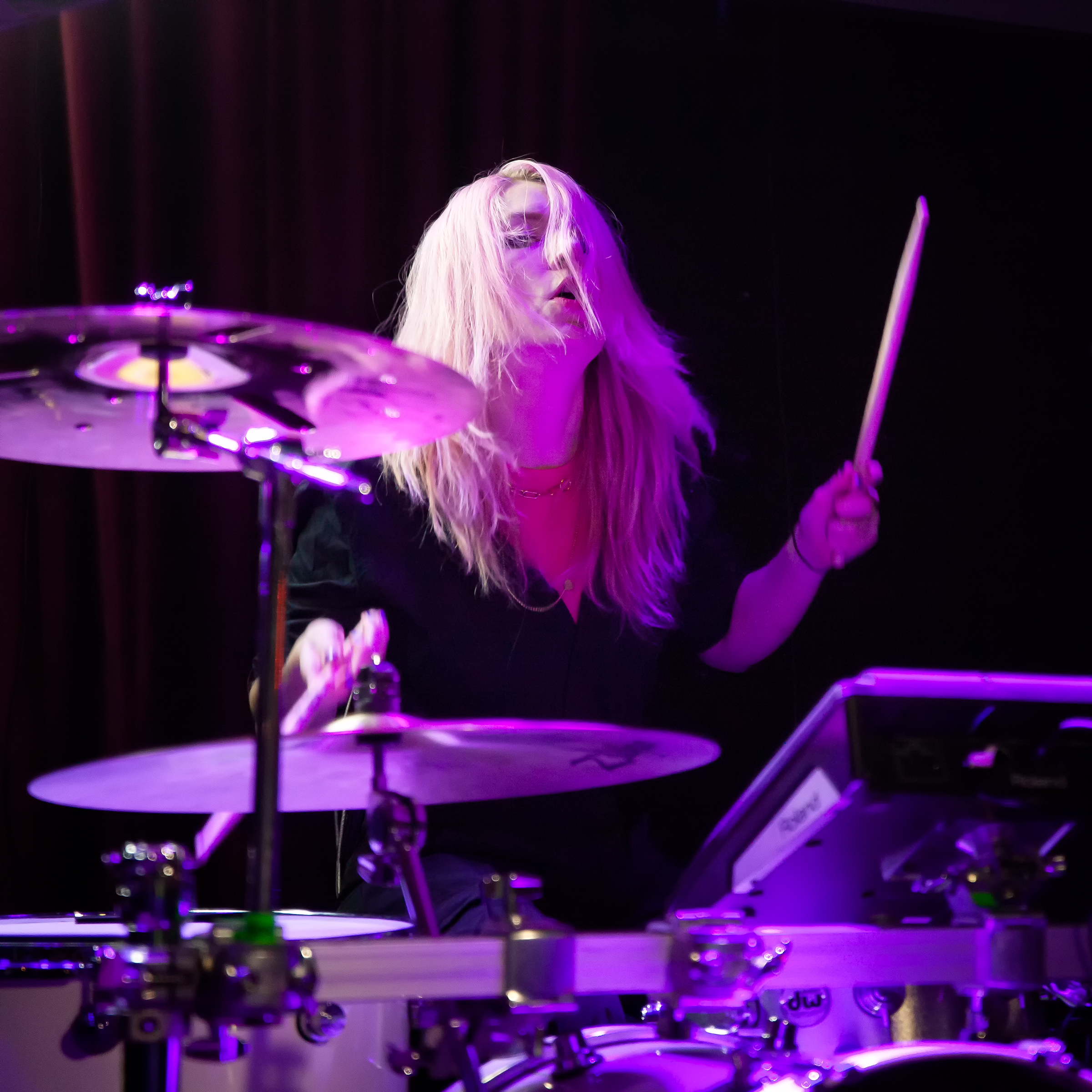
In my world, Luke Flowers’s drum solo during the song searched for the answer to why we love space. Why are we so fascinated by it? In short, because anything can happen in space. It’s immensely cool and the coolest of the immense areas that science tries to understand and fit into boxes. The same goes for jazz, we love it so much because anything can happen in it. While some might say it’s just an unstructured line of thought that can seem foggy at times, it comes with endless possibilities to deliver a message in a fluid yet precise form.
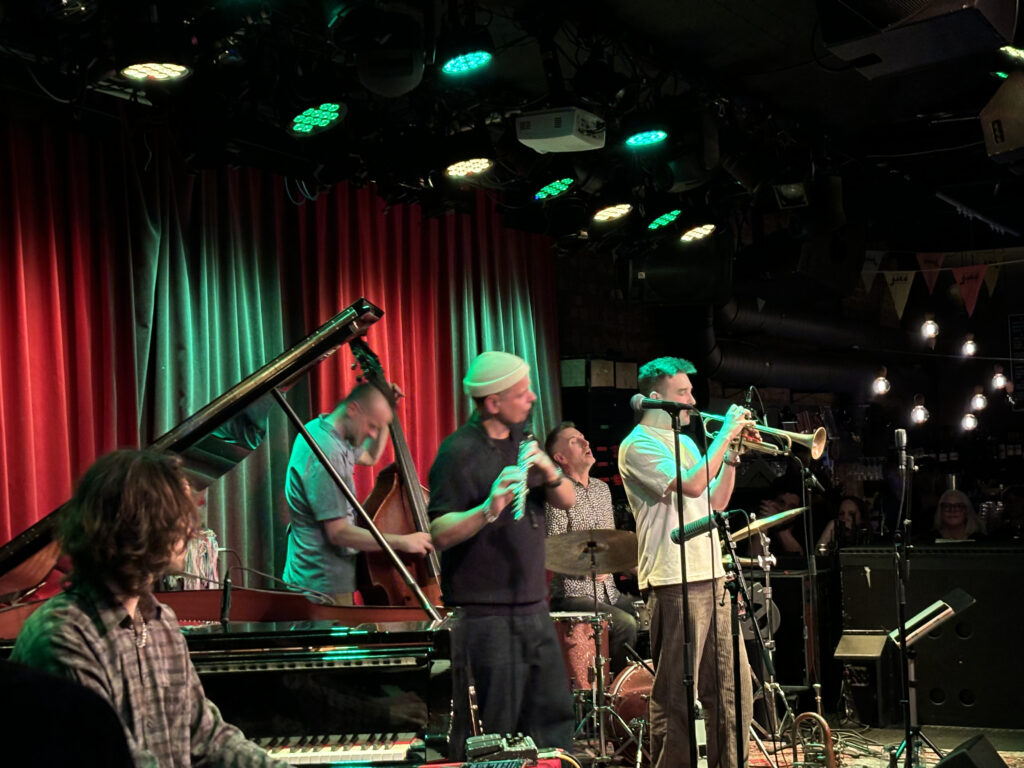
Later on, Wickham moved on to introducing his new album, The Eternal Now. He spoke passionately about his goal to create music not just for now, but for a long, long time. Wishing these tracks will still be listened to in 50, 60 years, Wickham dedicated two years to making this album. The band performed Drifting, The Road Less Travelled and Outside that all touch on topics of soul-searching and self-reflection. Outside, particularly, embodied the feeling of being an outsider or not quite belonging.
Wickham’s most popular track, Winter, really resonated with the “winter is coming” mood in Stockholm at the moment, making the audience hear but also intently listen to the subtle sounds. According to Wickham, a good title is very evocative in instrumental music since there are no lyrics to pin the meaning to. And even better, these one or two words in the title act as a teaser to the composition, making the listeners wonder and discover their personal interpretations behind its hues. Simon Houghton’s bass beautifully grounded the fleeting feeling of winter, cementing that playing quietly is so powerful when done right.
A similar feeling of less-is-more came through in Mighty Yusef, a tribute to Wickham’s inspiration and a great musician, Yusef Lateef. This composition honours Lateef’s elegant style and his ability to create a whole world with just a few notes.
Towards the end, more vibrant tracks like Snake Eyes, Double Cross and Tubby Chaser lifted the mood into orbit and got a very danceable groove going on. Both Wickham on the flute and Aaron Wood on the trumpet sprinkled the accents across the songs without stealing anyone’s thunder.
The grand finale was a thrilling power struggle between Simon Houghton on the bass and Luke Flowers on drums, giving us mortals a sneak peek into what it looks like to get caught up in the moment and explore on and off script. I think it’s safe to conclude that you can go to space, with no rocket science skills required: all you need is a shiny disco ball, reflecting dazzling lights and some good jazz.
So if you’re not afraid to explore, put on your astronaut suit and head out into the black sky, exploring the universe of jazz in the upcoming concerts of the festival!