

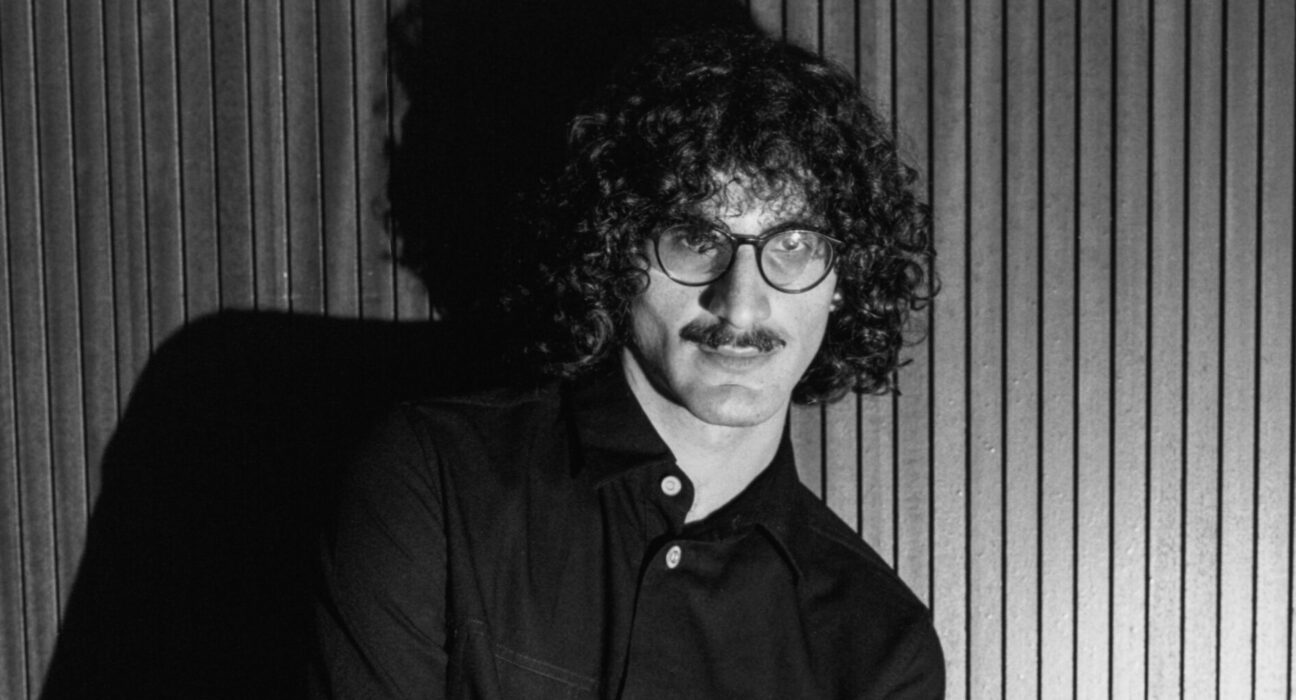
Giorgi Gigashvili is a Georgian pianist who has successfully established himself on the international stage, gaining recognition after winning First Prize at the Vigo International Piano Competition. Now nominated as one of this season’s ECHO Rising Stars, he makes his Konserthuset debut with a thoughtfully curated solo programme that reflects both technical command and a wide emotional palette.
As someone who believes a reviewer should be both descriptive and explanatory, I still think classical music, and piano music in particular, is best appreciated first-hand. All in all, it is better to hear it once than to read its description many times, but I will make my humble attempt to visualise the train of thought that Gigashvili’s concert took the audience on a Sunday afternoon in Konserthuset with its clear acoustics.
Classical music invites the listener to wander through their own imagination and feel it fully. And yet, in my mind, I try to find a common thread among the incoming thoughts during the concert since the musician made a deliberate decision to pick specifically these compositions and arrange them in a certain order. The artist’s programme combines pieces from French, Russian and Georgian composers, creating a rather international offering with a unifying idea of emotional journey, supported by skilful performance. For me, Gigashvili’s programme unfolded like the diary of an impressionable person.
The opening Ballade in f minor for piano by Frédéric Chopin made me think about a sorrowful conversation with oneself. Turbulent with inquisitive thoughts and with certain grandeur, the composition felt like all the unspoken thoughts of an introverted person struggling to express themselves out loud. This way, while navigating the internal waves of mutiny, our main character keeps a rather calm front. In his interpretation, Gigashvili kept a collected yet emotional demeanour.
The following Holy Atoms for piano by Natalie Beridze could be seen as an anthem of an overthinker. Going through the self-inflicted spiral of scattered thoughts, our character considers all the possible what-ifs with tangling absorption. Combined with Gigashvili’s expressive energy of a consumed and dedicated believer, one keeps shuffling an endless array of potential consequences. In spite of its structural complexity, Gigashvili kept a crisp dynamism throughout the piece.
D’un vieux jardin from Trois morceaux for piano and D’un jardin clair from Trois morceaux for piano by Lili Boulanger offered a rare moment of air from the emotionally intense section. These compositions felt like the aftermath of inner struggle when, one way or another, one finds their peace or humility. With a warmer tone, Gigashvili kept a good flow between these short compositions with structured pauses and clear punctuation.

Maurice Ravel’s Miroirs for piano opens an even more honest conversation. Sounding like a dialogue with many tangents, it invites the listener to let out their worrying thoughts and open up. Spanning nearly 30 minutes, the piece is captivating with its carefully paced progression, becoming an emotional high point of the concert.
The intermission came at the right time, helping the audience to feel less emotionally overwhelmed and recharge. Overall, the second half gave a more modern and raw musical impression. It was opened with Piano Sonata No. 2 by Dmitry Shostakovich, which tells a story that could remind one of a long speech an older person might share about times long gone. Full of drama and accumulated sadness, the piece is deeply reflective. Tense as a string and totally involved, Gigashvili seems charged as if an electric current were running through him. With a sense of commitment, the artist finished visibly drained, having completely involved the audience.
The finishing piece, Piano Sonata No. 6 by Galina Ustvolskaya, took a percussive and rather loud turn. Full of residual anger, it narrates what hasn’t been shared after you supposedly told the story of your life as it was. For the extra visual effect, enough to say that Gigashvili took off his jacket and even used his elbow on the keyboard. I would describe this last piece as the most controversial yet a logical conclusion to the concert.
Beaming with happiness, Giorgi Gigashvili received a standing ovation from the audience and returned to the stage for not one but two encore pieces: Domenico Scarlatti’s Keyboard Sonata in C major K 487 as a blissful conclusion to an emotional journey and Rusudan Sebiskveradze’s Chumad Gagikvan, a soulful song in Georgian, that made Gigashvili shed a few tears as he was leaving. It is safe to say he wasn’t the only one.
If you get a chance to attend Gigashvili’s performance in the future, I would recommend it without hesitation. Hopefully, it’s not his last time visiting Stockholm and sharing his committed and well-structured concerts with the audience.
Featured photo by: Jo Bogaerts