



Must listen: The Mamas & the Papas – California Dreamin’
At the beginning of the film, while I was still trying to understand what was going to happen, perhaps I was unaware of the effect this film would leave on me. Asian cinema has always been a cinematic journey for film lovers who are not afraid to dive into its depths. Chungking Express, however, does this from a slightly different place. Because here, rather than being presented with a story that we follow from beginning to end, we enter through a window that opens, for a brief moment, into other people’s lives. Like the Sunday afternoon sun filtering through a window. You are there for a while, watching them, witnessing their lives, and then you have to leave.
Everyone feels a little lost from time to time. So do I. Especially because of that strange longing I feel for Istanbul. Sometimes I don’t even know whether what I miss is really Istanbul, or even how I felt there. The desire is still there, and sometimes that hurts almost as much as realising that you have forgotten a little of who you are. I don’t remember exactly how I felt there, or how I behaved. I bring together some memories from the past, some images, some recordings, and try to define myself through them. I miss feeling bad there, and feeling good too. I miss the way the sea smelled.
Perhaps that is why Chungking Express made me feel seen and heard. The film consists of two different stories revolving around finding and losing love. Although the stories seem independent from one another, they actually touch each other in quiet ways. The way the characters and events from the first story appear in different forms in the second becomes even more apparent the more you watch the film. And Chungking Express itself, around which both stories somehow revolve, feels like a small fixed point standing among all these lost people.
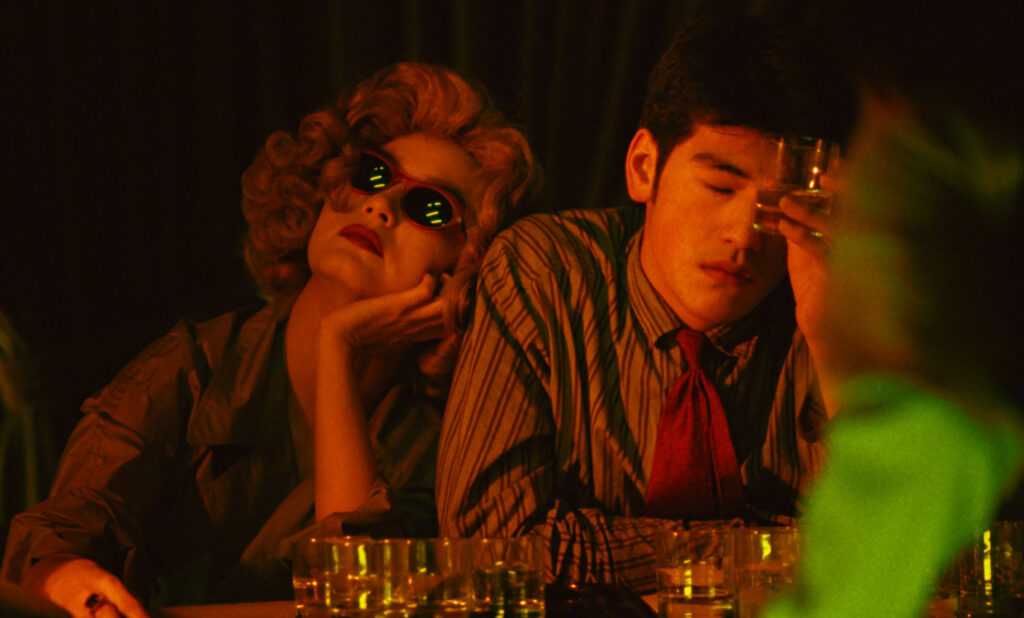
In the first story, we meet He Zhiwu, a young Hong Kong police officer on the eve of his 25th birthday. He broke up with his girlfriend a month ago and still believes that the relationship might be repaired. So he starts buying cans of pineapple, his girlfriend’s favourite fruit, whose expiration dates fall on his birthday. If his girlfriend does not come back by then, he will eat all the pineapples and move on with his life. Within this rather simple and slightly absurd habit, we actually see the small rituals people create for themselves after a breakup. Then the mysterious woman enters his life. When things go wrong for this woman, who is involved in drug trafficking, her path crosses with Zhiwu’s. They spend a night together, talking, and sometimes simply remaining silent. For Zhiwu, perhaps this encounter becomes part of learning how to finally move on with his life.
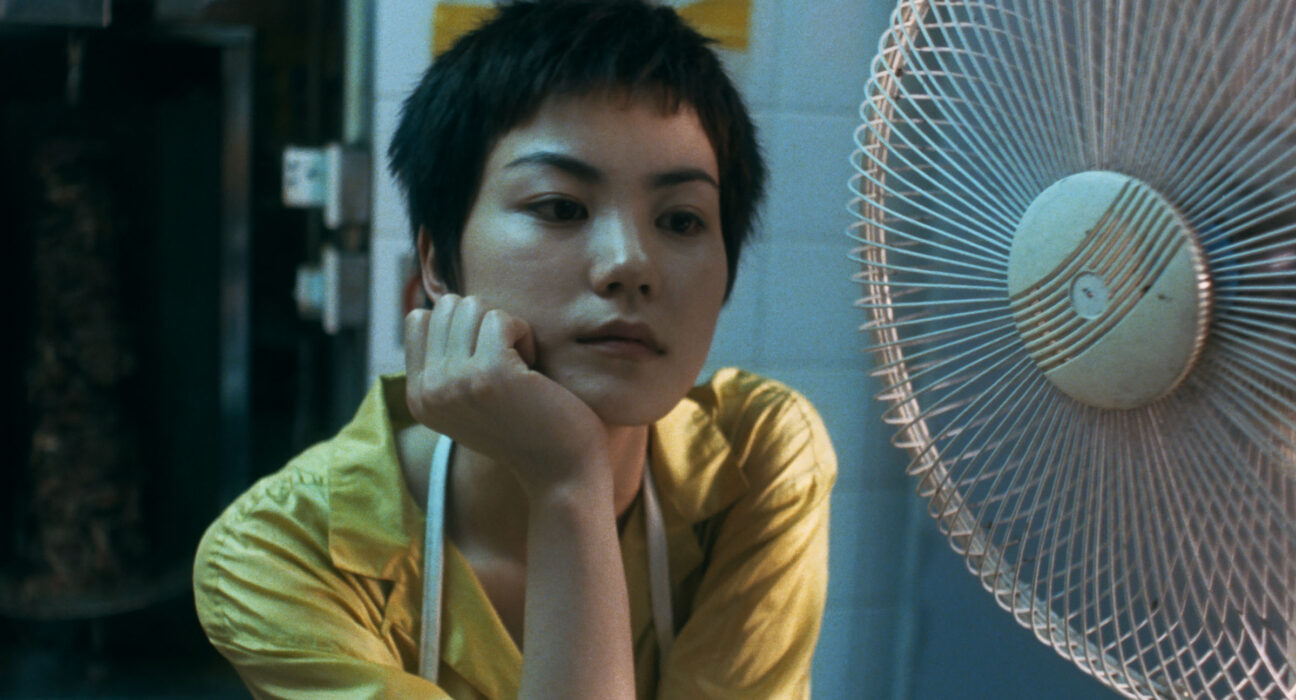
In the second story, we meet another police officer. He too has just broken up with his girlfriend, who is a flight attendant, and he often visits the Chungking Express. Here, he meets Faye. Faye enters his life almost without him noticing; first from a little distance, with a little curiosity, and partly from within her own world. Then she begins entering his apartment and changing the traces left behind in his life. As she slowly gets rid of the things his former girlfriend left behind, she is, in her own way, trying to change not only the place of a home, but also the place of a person’s life.
One of the things that stayed with me most about the film was the way people do not change their lives in a second because of love. Because real life is not quite like that. When people fall in love, they do not suddenly leave their entire past behind and become someone else. They still get lost, they still run away, they still cannot be sure of what they want. Sometimes, when we are not sure whether something we want most, something that is one of our greatest passions, can actually be sustained, when we do not have the strength to pursue that love at the cost of losing ourselves, they do what we do: they run away.
When Faye decides not to show up for the date, perhaps the audience asks, “Why?” But the answer is actually somewhere throughout the entire film. Sometimes some things simply do not happen at that moment. Faye goes to California and comes back a year later. This time, she has a new boarding pass in her hand. Faye asks Cop 663 where he wants to go; he says, “Wherever you want to take me.”
Maybe that is also part of it: the voice of that child inside all of us, the one who believes they have the power to do anything, becomes a little quieter. The voice inside your head grows deeper. You lose a little of the power to control your life. And like all of us, you start taking life far too seriously. Perhaps once no one has set out on this road, they can remain the same dreamer they once were.
Chungking Express does not explain this to me. It does something more beautiful; it shows that on faces. Throughout the film, the colours also seem to accompany the characters’ lives. Oranges, greens, yellows; sometimes pale, sometimes under white light, sometimes directly in the sunlight. There is something here that feels different from the colour worlds we are used to in European or Middle Eastern cinema. But these colours do not make the characters look more “cinematic”. On the contrary, they accompany the normal, natural, sometimes boring, and most deeply real state of their lives. The camera enters their lives so closely that at some point, we stop feeling like we are watching them and start feeling as if we are living alongside them. The visual world created by the film’s cinematographers, Andrew Lau and Christopher Doyle, strengthens this even further.
But what affected me most was not only the colour palette, also the way the film creates all of this through movement and the camera. Wong Kar-wai often shows his characters while they are in motion, within blurred images or through crowds. In particular, the use of step-printing and a slow shutter turns people’s movements into images that leave trails behind them. As if, while the characters are trying to get somewhere, they are leaving a part of themselves behind. Sometimes the camera cannot keep up with them; sometimes it loses them within the crowds surrounding them. All of these technical choices strangely fit the sense of transience and being lost that the film describes.
At the same time, the glass, doors, windows and narrow corridors within the frames constantly create a distance between the characters and us. We see them, but we can never completely reach them. This feeling is especially strong in Faye and the police officer’s story. They enter each other’s lives, but there is still an invisible distance between them. The camera seems to know this too; rather than showing them directly and perfectly, it catches them from behind something, from the side, or from within the movement.
And perhaps that is why the film made me think of Istanbul. Missing a city is sometimes stranger than missing the things you experienced there. Trying to remember who you were there, how you felt, how you behaved before you left. Using certain memories as proof of yourself. As California Dreamin’ played, the film picked me up from one place and left me somewhere else. I don’t exactly know where it took me. Perhaps this is also a part of the beauty of the film. It does not give us a clear answer. Maybe escaping is something everyone who grows tired of the weight of their own world does. After all, sometimes there is no harm in stepping into another life for a little while.
Movies stills: Janus Films