





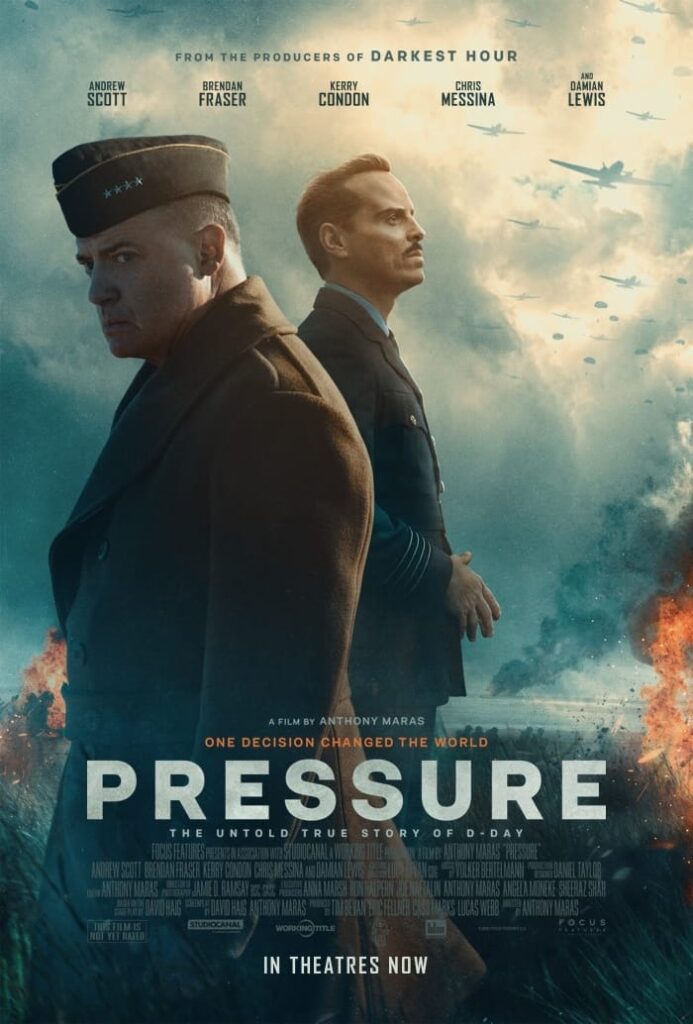
The film Pressure leaves an undeniable impact from its very first scene, creating an atmosphere where it feels as if someone has walked into the room, making it impossible to look anywhere else, listen to anyone else, or think about anything other than what is right in front of you. The music is a huge part of that first impression and serves as the most effective factor in creating this immediate impression. Throughout the film, the soundtrack complements every critical moment so deeply that we feel as if we are right there in 1944 England, actively planning the invasion alongside the characters. It is incredible to feel such a strong sense of belonging to a period in history that we never experienced, living every tense moment through their eyes.
With the film set to hit Swedish cinemas on September 18th, its recent screening through Stockholm Film Club offered local audiences an early look at the film. From the very beginning, the film creates a strong sense of tension through a classic cinematic foreshadowing technique. A single shot in a single location gives us an immediate glimpse of the unavoidable outcome we will witness later. Soldiers lie on the beach under the bright sun, their bodies floating while the blue waters of the English Channel blend into red with their blood. Meanwhile, the world keeps moving that day as if nothing has happened, capturing both the sadness and victory together, as well as the heavy cost of sacrifice for the Allies.
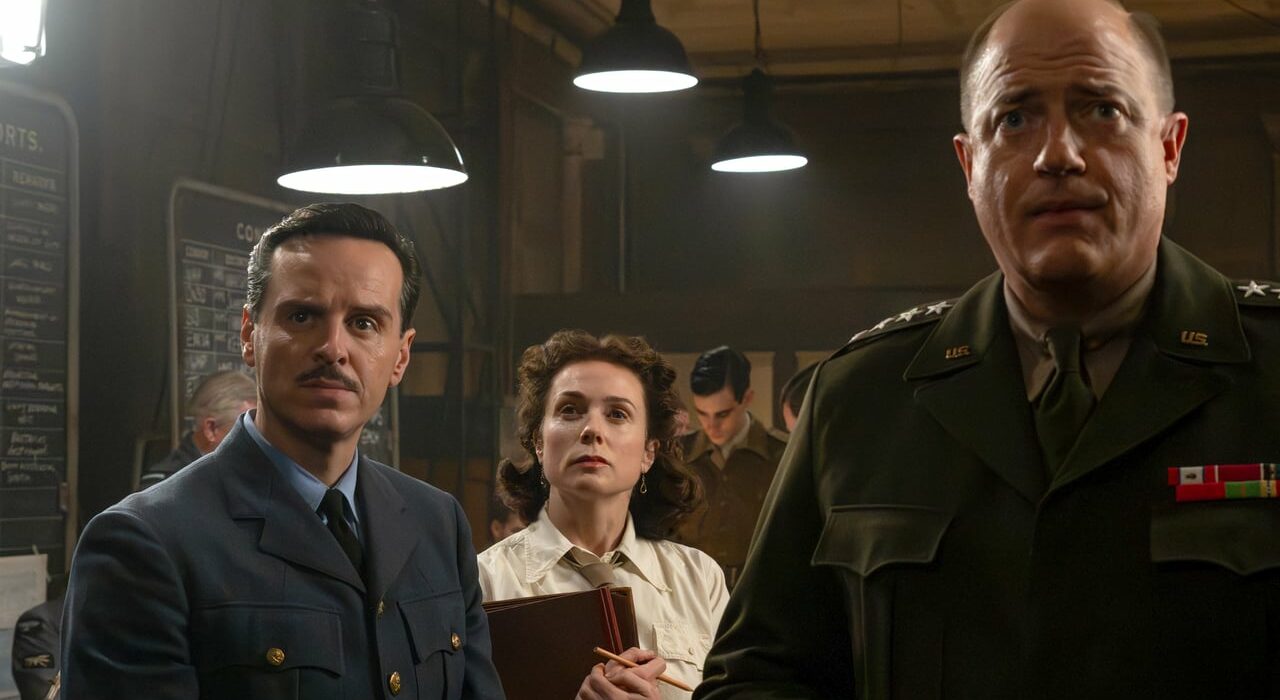
While history lovers are likely already familiar with the story, everything begins 72 hours before D-Day. General Dwight “Ike” Eisenhower (Brendan Fraser) and the Scottish meteorologist James Stagg (Andrew Scott) are the main figures of these 72 hours, facing one of the most dangerous seaborne invasions in history, knowing that a failure could have changed the course of the war.
Stagg’s expertise points to the need to delay D-Day beyond Eisenhower’s planned date of June 5th, starting the story with mounting tension as the title Pressure becomes increasingly literal. Although Stagg is there to present his research and recommend the best possible date, it feels as though everyone just wants to hear that the planned date is good to go, since the Americans are eager to move forward, fearing that any delay might give the enemy enough time to learn about the plans and prepare their defenses. With a determined attitude, Stagg doesn’t change his opinion, even though Irving Krick’s (Chris Messina) cocky and territorial behavior makes the situation much harder, alongside the added strain of his wife’s condition, as she is close to her due date while he is away on this critical duty.
Director Anthony Maras co-wrote the first-rate screenplay with David Haig, the playwright who created the theatrical version, making the story feel urgent from the start. Throughout the movie, Kerry Condon (as Kay Summersby) brings the warmth that the audience needs in war-themed films. We witness conversations that lighten the mood through her intelligence and her ability to manage people through constructive communication. With her presence and the way she communicates with him, Stagg seems to find a clearer direction emotionally from time to time.
Jamie Ramsay’s cinematography is one of the film’s quiet strengths. He creates a kind of magic with the camera, almost so casually that we might not appreciate it enough in modern cinema. The lighting, the framing, and costumes offer mind-blowing scenes where we feel excited, completely focused on the narrative, and connected to the characters. There is a kind of emotional manipulation here, in the best possible sense: Ramsay knows when to make us look, when to make us wait, and when to make us feel the weight of the moment. As a film enthusiast, that is exactly the kind of cinematography I enjoy.
Tension remains high during the planning meetings and when the meteorologists present their studies for D-Day. A couple of times, they repeat: “Are you certain?” “No, I am not,” reflecting how the weather can never be one hundred percent predictable, showing the power of nature over us, a force we often forget, but one Stagg understands deeply.
The movie’s soundtrack constantly prepares us for the next scene, almost following our heartbeat and offering enough excitement, curiosity, and worry to walk through the unknown with them. Everyone carries their own emotional burdens, and perhaps victory is simply the word we put at the end of it all. It may not be an absolute win given the loss of soldiers, but it is a victory for executing the plan safely. Stagg was right, proving everyone wrong while storms approached, taking on a massive responsibility and a gamble that nobody else was willing to play.
Not only history or film enthusiasts, but anyone can find an emotion or an experience to connect with in this film. Perhaps that is why, despite knowing how the story ends, we still find ourselves hoping, worrying, and waiting with them. For a film about an event whose outcome history has already decided, Pressure somehow makes us feel the uncertainty all over again.